Thanks for Following

Monday, January 31, 2022

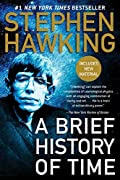
A Brief History of Time by Stephen Hawking: A review


Stephen Hawking's most famous book was published in 1988 and became a surprising best-seller. Of course, there is no way of knowing how many of those books that were bought were ever actually read. I acquired a copy of it during that time with all good intentions of reading it and it has languished on our bookshelves ever since. I was otherwise engaged in 1988, raising children, and should surely have known better. Anyway, to make a long story a bit shorter, I decided that 2022 would finally be the year that I made good on my intention. And since, these days, I read books exclusively on my Kindle, I even got the ebook. That paper volume is still gathering dust. 

The first thing to be said about the book is that Hawking intended it for the general public, people with no particular background in or knowledge of physics. In other words, dummies like me. He made every effort to keep it simple. In fact, at times I can almost feel him straining to do so. But ultimately it seems to be a losing battle. His explanations progress from obvious descriptions into more arcane territory where I frequently lost my way. Still, I found that reading the book was a worthwhile exercise and I was able to pick up a bit of knowledge along the way. In the end, the book left me feeling both smarter and dumber.

My Kindle edition was the latest iteration of the book because there had been a lot of discoveries and changes of interpretation since the original was published lo those many years ago. It included a new foreword by Hawking and various corrections and updating that he had done. He delves into how the universe began and whether or not there are boundaries to it. Does it simply go on forever? And what exactly is forever? Will it all finally end and if so, how and why? I understood perhaps a tenth of his discussion.

Hawking's discussion and explanations of black holes and quarks were quite fascinating and, again, even though I didn't get it all, what I did get astounded me. He does make clear that much of this is simply speculation based on known facts and we don't really understand much about black holes, even to whether or not they actually exist. At some points, my poor brain felt as though it were being sucked into a black hole. 

Much of this relatively short book is devoted to the history of science and famous scientists and those parts at least I could understand. I did, for example, learn more about Newton and why we owe him so much. And I did get a better understanding of the Big Bang theory (the actual theory, not the tv show) and why it could have happened just like that and is accepted by most of the scientists of the world today. Hawking, somewhat surprisingly, did not believe that the theory excluded the idea of a god or some original intelligence behind it all. 

Amazingly, considering all the challenges he faced in his life, Stephen Hawking had an intact sense of humor which shines through frequently in the book. That's not really a surprise to those of us who witnessed his appearance on The Big Bang Theory (the tv show, not the actual theory). 

Finally, I should explain that my rating of this book has more to do with my understanding of it than with the quality of the writing which is actually quite good. It was a slog for me, but I would still recommend it to anyone who is willing to make the effort.

My rating: 3 of 5 stars


Saturday, January 29, 2022

Poetry Sunday: Music by Ralph Waldo Emerson

It may be easy enough for us to see or hear the music in beautiful things, but Ralph Waldo Emerson maintains that even in the ugliness of life there is music. Even in the "darkest, meanest things" or in the "mud and scum of things" always something sings. It may be a challenge to hear that music but the effort is worthwhile.

Music

by Ralph Waldo Emerson
LET me go where'er I will,
I bear a sky-born music still:
It sounds from all things old,
It sounds from all things young,
From all that's fair, from all that's foul,
Peals out a cheerful song.
It is not only in the rose,
It is not only in the bird,
Not only where the rainbow glows,
Nor in the song of woman heard,
But in the darkest, meanest things
There alway, alway something sings.
'T is not in the high stars alone,
Nor in the cup of budding flowers,
Nor in the redbreast's mellow tone,
Nor in the bow that smiles in showers,
But in the mud and scum of things
There alway, alway something sings. 


Friday, January 28, 2022

This week in birds - #486

 A roundup of the week's news of birds and the environment:


A Red-bellied Woodpecker poses for us, showing off a bit of that red belly. 

*~*~*~*

A federal judge has canceled oil and gas leases for more than 80 million acres of the Gulf of Mexico, ruling that the Biden administration did not sufficiently consider the effects of climate change.

*~*~*~*

Meanwhile, the administration has canceled mining leases that would have allowed a Chilean mining conglomerate to dig for copper and nickel near the Boundary Waters wilderness in Minnesota.

*~*~*~*

Red Knots like to feed on the abundant protein-rich horseshoe crab eggs along the Delaware coast. Conservation groups warn that changes planned for the horseshoe crab harvest could be a threat to the birds.

*~*~*~*

A huge iceberg that broke off the ice shelf on the Antactica Peninsula in 2017 had been drifting across the southern ocean ever since, but near South Georgia, it has finally broken up and the pieces drifted away.

*~*~*~*

Last year about 15% of the total population of manatees in Florida died, most of them from starvation. Efforts are underway to try to save those that remain. As their natural food source is polluted or depleted, they are being fed heads of lettuce.

*~*~*~*

Tropical Storm Ana hit parts of Africa this week, killing more than 70 people in Mozambique, Madagascar, and Malawi, and leaving thousands more stranded by flooding.

*~*~*~*

North America is losing its birds at an alarming rate, more than a fourth of the species in the past half century.

*~*~*~*

The DNA of small dogs has an ancient pedigree. It seems that, according to researchers, the smaller version is the ancestral model

*~*~*~*

The one-horned species of rhino was nearly extinct before poaching was curbed. Now they are under threat again, this time from the effects of climate change. Wildlife experts in Nepal are planning for the species' future.

*~*~*~*

Elderly people living near or downwind from fracking sites are more at risk of dying prematurely, according to a major new U.S. study by researchers at the Harvard TH Chan School of Public Health.

*~*~*~*

Our species has pushed the planet's viability to sustain life to the brink. Deadly chemical pollutants that we have unleashed have passed the safety limit of the planet. 

*~*~*~*

Texas now sees hundreds of yearly earthquakes of 2.5 magnitude or greater. That is the minimum that humans can feels. Moreover, it experiences thousands of smaller quakes. Why? It's all down to the drilling practices of the oil and gas industry.

*~*~*~*

The decision by the Supreme Court to hear arguments to limit the scope of the EPA's power under the Clean Water Act has conservationists alarmed. It is widely expected that the conservative majority on the court will issue a ruling that will undermine the agency's authority to protect.

*~*~*~*

Rewilding teams in Finland are working to restore the country's river ecosystems and to encourage the return of wildlife after decades of damage by the forest industry.

*~*~*~*

Three sparsely populated islets were hit by fifty feet high waves resulting from the Tonga tsunami, causing catastrophic damage to them.

*~*~*~*

Here's a look at some of the marvelous birds of the "dawn chorus" in Texas' lower Rio Grande Valley.

*~*~*~*

A new analysis of leaves and bird feathers from the old growth Amazon forest shows alarming levels of mercury, providing new evidence of how people are altering ecosystems in dangerous ways around the world. 

*~*~*~*

The James Webb Space Telescope, launched on December 25, has traveled about a million miles and has reached the point from which it could spend the next twenty years in surveillance of the cosmos. 

*~*~*~*

Western Burrowing Owls are remarkably tolerant of human activity. Even so, they are inevitably being displaced by development activities and wildlife officials are working to collect and transplant the owls to new areas that the conservationists believe will meet their needs.

*~*~*~*

Freshwater mussels are some of the most imperiled species in North America. They are also important beneficiaries of dam removal and fortunately for them removal of dams is becoming more common on the continent.

*~*~*~*

The descendants of Native American tribes on the northern California coast are reclaiming part of their ancestral homeland, including ancient redwoods that have stood since before their ancestors walked the lands. Save the Redwoods League has announced that it is transferring more than 500 acres to the tribes.

*~*~*~*

Enjoy these pictures of a Belted Kingfisher on the hunt.

Wednesday, January 26, 2022

A Calling for Charlie Barnes by Joshua Ferris: A review


It's hard to get a handle on Charlie Barnes at first. His story is narrated by his son, Jake Barnes. Jake is a novelist and he tells the story not in a linear fashion but as a series of zigzags through time. Each new direction takes us to another aspect of Charlie's life. Even so, all those different aspects don't necessarily shed too much light on who exactly he is. They are often contradictory and lead to questions rather than answers.

When we meet him, he is 68 years old. In those eventful years, he has married five times, fathered assorted children, and held at least 40 different jobs. Each new job or situation seems to reveal a different personality. He's had numerous failures and has "started over" many times. He is described at one point as "effectively insane since about 1960." At different points in his life, he's been a hippie and a financier. Once he even worked in social services. His financier period coincided with the 2008 financial crash. It ruined Charlie and many of his clients. What is clear from the story the son tells is that his father is steeped in cynicism.

He is also a fabulist. He makes things up and he begins to believe his own stories. He seems to have difficulty discerning fact from fiction. When we first meet him, he has just discovered that he has pancreatic cancer. He seems delighted by the fact. Soon he is calling everyone who ever treated him badly and relating his sad news, hoping to make them all sorry. But then we learn that he's not really sick at all. It was all his own diagnosis. He's an unreliable narrator of his own life.

Unreliable, yes, but quite funny. The biography of Charlie is split into two sections, one called "Farce" and one called "Fiction." Both live up to their titles but both are full of satire and never serious. In fact, the narrative is often hilarious and keeps us guessing throughout. What outrageous thing will "Steady Boy" do next? Steady Boy was Charlie's nickname and no nickname was ever less apt! Steady he never was.

This was Joshua Ferris's fifth book. I had never read any of the earlier ones, one of which, To Rise Again at a Decent Hour, was a Booker Prize finalist. So his books have been well-known among critics but apparently have never reached wide readership. This one is said to be more accessible than the earlier ones. It is loosely based on his father who died in 2014 and there is real feeling behind his prose. One senses that the story does contain real people and that there have been real wounds experienced by some of those people. We can never really feel comfortable that we know where this story is headed. But, never mind. Just relax and enjoy the ride. We may not be able to see where we are going but the author never loses sight of his objective.   

My rating: 4 of 5 stars

Monday, January 24, 2022

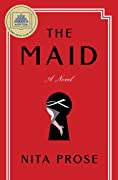
The Maid by Nita Prose: A review


"I love cleaning. I love my maid's trolley, and I love my uniform," so speaks Molly the maid in Nita Prose's debut novel, The Maid. Molly is the first-person narrator of the novel and what a wonderful narrator she is. We are able to fully enter her world as a maid at the Regency Grand five-star boutique hotel where she cleans twenty-plus rooms every day. "I like things simple and neat," says Molly. "Never in my life did I think I'd hold such a lofty position in a grand hotel."

From these quotes, you might gather that Molly has a rather simplistic view of the world and that is accurate. She is devoted to her work and was devoted to her grandmother who raised her and who was also a maid. But when we meet Molly, her grandmother had died nine months before, leaving her alone in the world. She no longer has anyone to interpret the meaning of social interactions for her and Molly badly needs that. She is very "different," possibly on the Autism spectrum although that is never stated. She admits to us at one point that she has trouble in social situations because "it's as though everyone is playing an elaborate game with complex rules they all know, but I'm playing for the first time." Perhaps we've all been in situations at one time or another in our lives where we felt like that. In other words, though Molly sees the world through her own different and simplistic lens, she is a very relatable character.

Molly's life continues on its well-established course of going to work every day. Work is her respite from a confusing world. She is not totally without friends. Mr. Preston, the doorman at the hotel, actually knew her grandmother and he tries to look out for Molly and help her negotiate the sometimes confusing demands of the world. His friendship will become especially important when Molly finds the body of a guest, Mr. Black, dead on his bed when she went to clean his room. And it was not a death from natural causes; Mr. Black was murdered. 

When Molly had first gone to clean the room, Mrs. Black was in the shower and so her cleaning and her discovery of the body were delayed. Since she is unable to interpret social interactions, she never makes any connection between those two facts. She also seriously misinterprets the actions of the hotel's head bartender, Rodney Stiles, on whom she has a crush. When she does discover the body and reports it, once again she is unable to understand what is required of her or why the police would find it strange that she is so eager to get back to her cleaning. Her behavior is seen as suspicious and soon she finds herself as the prime suspect in the murder. That's when Mr. Preston and his daughter, Charlotte, who is a lawyer, come to Molly's rescue.

Of course, we know that Molly didn't kill anybody and we may be able to suss out pretty quickly who did, but Molly doesn't because she doesn't pick up on cues and this novel is really about her and not so much the mystery of the murder. Molly always takes things at face value. She isn't able to interpret, but taking things at face value actually turns out to be one of her strengths and it ultimately allows her to assist the police in their inquiries and to catch a killer.

Nita Prose never indicates where the Regency Grand is located, but the novel - especially the portrayal of the grandmother - has quite a British flavor and since she lives in Toronto, it seems likely that is the location of her hotel. It never really makes a difference as far as the action is concerned, I guess, but I just like to be able to assign a location. This story that starts out as a murder mystery is actually a delicate character study of a unique personality and the personal growth of that person when faced with difficult circumstances. Molly the maid is a wonderful character and a credit to her creator. I have no idea if the writer has any plans to write further adventures for her, but I would certainly read any book that featured her.

My rating: 5 of 5 stars

Saturday, January 22, 2022

Poetry Sunday: Snow Day by Billy Collins

We don't generally get a "revolution of snow" where I live. Indeed, if we got snow it would be a revolution of sorts. But Billy Collins writes of places that are more...wintry. Where snow can cause the closing of schools and interrupt the plotting of children. 


Snow Day

by Billy Collins

Today we woke up to a revolution of snow,
its white flag waving over everything,
the landscape vanished,
not a single mouse to punctuate the blankness,
and beyond these windows

the government buildings smothered,
schools and libraries buried, the post office lost
under the noiseless drift,
the paths of trains softly blocked,
the world fallen under this falling.

In a while, I will put on some boots
and step out like someone walking in water,
and the dog will porpoise through the drifts,
and I will shake a laden branch
sending a cold shower down on us both.

But for now I am a willing prisoner in this house,
a sympathizer with the anarchic cause of snow.
I will make a pot of tea
and listen to the plastic radio on the counter,
as glad as anyone to hear the news

that the Kiddie Corner School is closed,
the Ding-Dong School, closed.
the All Aboard Children’s School, closed,
the Hi-Ho Nursery School, closed,
along with—some will be delighted to hear—

the Toadstool School, the Little School,
Little Sparrows Nursery School,
Little Stars Pre-School, Peas-and-Carrots Day School
the Tom Thumb Child Center, all closed,
and—clap your hands—the Peanuts Play School.

So this is where the children hide all day,
These are the nests where they letter and draw,
where they put on their bright miniature jackets,
all darting and climbing and sliding,
all but the few girls whispering by the fence.

And now I am listening hard
in the grandiose silence of the snow,
trying to hear what those three girls are plotting,
what riot is afoot,
which small queen is about to be brought down.

Friday, January 21, 2022

This week in birds - #485

 A roundup of the week's news of birds and the environment:

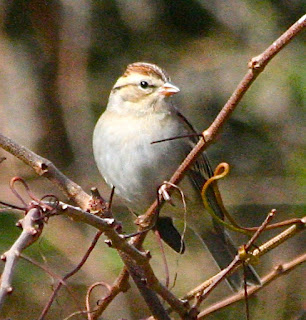
The chippies have arrived! Chipping Sparrows are always one of my favorite winter visitors. I generally see them in mixed flocks of small birds, but this week there was a pretty big flock of only the little sparrows - about 15 to 20 birds - around my front yard feeder. What a wonderful sight!   

*~*~*~*

The Tonga volcanic eruption and its aftermath are still making news. The eruption itself was captured by satellite imagery and could be seen from space. Meanwhile, scientists are trying to understand the global implications of the eruption. Their conclusion is that it may affect global weather, at least in the short term.

*~*~*~*

Ecuador has announced that it is extending protections for the Galapagos Islands to more than 20,000 square miles of ocean to the northeast of the archipelago. No fishing will be allowed in half the area and longline fishing will be banned in the rest.

*~*~*~*

The Cornell Lab of Ornithology has announced a new online course entitled "Feeder Birds: Identification and Behavior." It is designed for backyard birders to learn more about identifying and understanding those birds. And it is all just in time for the Great Backyard Bird Count that takes place annually on Presidents' Day weekend, this year February 18-21.

*~*~*~*

Here's a reminder that the warming ocean is likely to create substantial changes in marine ecosystems.

*~*~*~*

A small pristine seven-acre island that sits in the Prairies River between Montreal and Laval in Quebec has been donated by its 93-year-old owner to the Nature Conservancy of Canada. He had owned the island since the 1960s and had rebuffed many offers over the years from developers to buy the land. 

*~*~*~*

The California city of Sunnyvale has been overrun by thousands of American Crows. The streets are "riddled with crow poo" and city officials are planning to use lasers to try to chase the birds away.

*~*~*~*

It is a massacre. The slaughter of gray wolves in the states of Montana, Idaho, and Wyoming has no precedent within the last century.

*~*~*~*

In what is the first known incident of a human-engineered hybridization of species, DNA studies have shown that a female donkey and a male Syrian wild ass were crossed to create the kunga in ancient Mesopotamia 4,500 years ago.

*~*~*~*

Koalas are getting harder to find in the wild, but scientists in Australia are searching for what may be a hidden population of the charismatic animals.

*~*~*~*

Illinois has recently passed the Climate and Equitable Jobs Act which offers a model for other states to build coalitions to help communities and the planet.

*~*~*~*

The cocktail of chemical pollution that pervades the planet threatens the stability of the global ecosystems upon which humanity and, indeed, all life depends. It is past time for drastic action to contain the production and release of those pollutants.

*~*~*~*

And in the Northeast U.S. lead ammunition is hampering the recovery of the Bald Eagle. Ingesting the ammo is killing large numbers of eagles every year, according to a new study.

*~*~*~*

French researchers have discovered one of the world's largest previously unknown healthy coral reefs off the coast of Tahiti. The discovery raises hopes that other such finds may be waiting for explorers.

*~*~*~*

Global climate warming is turning the Arctic green and that is not a good thing.

*~*~*~*

The debate about Pluto's status continues. Is it a planet or isn't it? Well, as far as I'm concerned, that debate is long settled; Pluto always has been and will be a planet! 

*~*~*~*

Climate change is forcing adaptations throughout Nature and that includes among the Magellanic Penguins of Patagonia like this one.

*~*~*~*

The Olympic Cougar Project is a partnership between Native American tribes, a renowned cougar expert, and biologists with the Washington Department of Transportation. Studying the animals means tracking them which depends on fitting them with collars that have batteries. What happens when those batteries have to be changed? 

*~*~*~*

The summer heat torturing the southern hemisphere continues. On January 13, Australia tied the record high temperature for the southern hemisphere at 123.3 degrees F. That record had held since 1060.

*~*~*~*

A rare Hawaiian plant sometimes referred to as a "cabbage on a stick," was declared extinct in the wild in 2020, but it persists thanks to the efforts of dedicated biologists

*~*~*~*

The Biden administration is expanding efforts to stave off catastrophic wildfires in the West. The plan is to more aggressively thin forests around "hot spots" where Nature and neighborhoods collide. The plan is set to cost $50 billion.

*~*~*~*

The iconic Joshua trees of the Mohave Desert are facing several threats to their survival including climate change and human development. But a dedicated band of volunteers is planting Joshua seedings to try to replenish the ravaged forest.


Wednesday, January 19, 2022

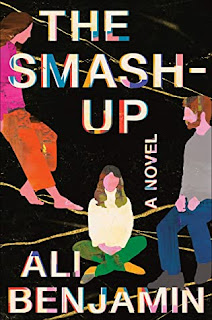
The Smash-up by Ali Benjamin: A review


Ali Benjamin has taken her inspiration from Edith Wharton's Ethan Frome, even borrowing the name of its title character. Her Ethan and his wife Zenobia ("Zo") and their 11-year-old daughter Alex have moved from New York to the village of Starkfield, Massachusetts, a fictional town in the Berkshires, in search of a quieter, less complicated life. Starkfield is described as possessing "a nondescript village green, around which are scattered a handful of small businesses, no more than one of every variety." It sounds idyllic, but it doesn't quite work out that way.

Ethan is the semiretired co-founder of a media start-up. His former partner is being accused by a former employee of sexual harassment and exploitation and he is pressuring Ethan to support him. Zenobia is a struggling filmmaker who gets deeply involved with a local activist group called All Them Witches. It is September 2018 and the Senate confirmation hearings of Brett Kavanaugh are in progress. The "Witches'" outrage is palpable. Meanwhile, Alex is completely obsessed with "Wicked" and she is seriously impulse-challenged. She attends Rainbow Seed School and the parents of some of her classmates are not happy about that and are trying to push her out. The family lives in a half-restored (they've run out of money to complete the restoration) house with their aging dog, Hypatia, and a boarder/babysitter named Maddy. All of these challenges are threatening to crumble the Fromes' marriage.

For the Fromes, the 2016 presidential election marked "the break between before and after, then and now." Ethan was convinced that it was really no big deal and everything would be okay because this is America. Zo's reaction is white-hot fury. That's when she came to help organize the group that became All Them Witches, a sobriquet bestowed by some old guy who was appalled at their activities. They happily adopted it as their own. The group organizes, makes posters, and marches to protest. They meet twice a week, many of them proudly wearing their pink hats.

With Zo's involvement with her group, Ethan suddenly has more of the household's domestic responsibilities. He has more of the care of Alex, including making sure she gets to bed on time. He feels all of these added responsibilities as something of an imposition, a sentiment with which Maddy sympathizes. The reader might here suspect that these two are headed toward an affair and Ethan seems like he would welcome that but Maddy has other things on her mind.

The fraught politics of the time impact all of their lives and it seems that the Fromes have forgotten why they moved to Starkfield in the first place. They had hoped to build a supportive and peaceful idyll that would encourage creativity and provide an environment where their daughter could develop into her best self. All of those good intentions now seem at risk. Can this marriage be saved? Should it be?

Ali Benjamin is a skilled writer. She tells her story through the character of Ethan. She presents him as a well-intentioned but misguided husband and father who doesn't really understand why his wife is so angry and what she is trying to accomplish through her activism. At the same time, Zo is presented sympathetically and we can see, as perhaps she can't, that Ethan himself may, in fact, be one of the men who is part of the problem that her group is protesting. Meanwhile, they both at times seem to lose sight of their daughter's needs. There are no real heroes here and it is hard to know just who one should root for. I choose Alex. She is a delightful character and her part in this narrative is often quite funny. The levity is most welcome.

My rating: 4 of 5 stars


Tuesday, January 18, 2022

All Girls by Emily Layden: A review


The "all girls" of the title refers to an all-girls boarding school in northwest Connecticut. The action takes place in the 2015-16 academic year which is chiefly important because it is prior to the #MeToo movement. The main character in the book is the school itself, called Atwater. It is a beautiful campus and the school is steeped in tradition and has high academic standards. It's the kind of a place where the rich and famous send their daughters and it's the kind of place that obsessively guards its unsavory secrets. The unsavory secret it was guarding in 2015-16 was a sexual assault lawsuit from an alumna who was raped by a teacher 20 years before. Apparently, the teacher is still working at the school. Families driving to the school to deliver their daughters on move-in day are greeted by signs along the roads that say "A Rapist Works Here."

The school manages to get the signs removed fairly quickly, but the local newspaper gets the story and publishes an article about it. The genie is out of the bottle. Strangely it seems to me, this does not appear to give any parents second thoughts about the school, or at least they are not a part of this narrative. Their daughters are left to deal with the fallout of the allegations as they experience all the hustle and bustle of boarding school life.

The story of life at the school was confusing and hard to follow for me. That was mostly down to the fact that the narrative is told from the points of view of nine - count 'em, nine! - different girls. There is just too much information here about all the girls and about various school personnel. It's been ten days since I finished reading this book and, honestly, I could not now tell you the name of any of those nine girls or differentiate any of their backstories. They are all just a blur to me. In my opinion, the author (for whom this was her first novel) would have done better to tell the story from the point of view of only one or two of the girls with the others as secondary characters. It certainly would have made the story easier to follow.  

Where the author truly excelled was in the depiction of day-to-day life at the boarding school. She believably gives us the relationships that form among these high school girls as they deal with their own problems and anxieties. And always in the background are the questions about the scandal facing the school. Are the complainant's charges true? If so, who is that rapist? Why did the school cover it all up and never deal with it? The various responses of the girls also are rendered believably. Some of them blame the victim or believe she is lying. Others may recognize the wrongdoing but they don't know how to respond to it. Again, it is important to remember that this is pre-#MeToo and these girls are products of their upbringing and basically have no tools to recognize how they are being manipulated and possibly betrayed. Their school's lack of transparency leaves them ambivalent and confused.

I experienced a slow burn of outrage in reading this book. The school's lack of accountability is truly infuriating and the reader wishes for just one character with the courage to stand up and say, "This is wrong!" In fact, the school newspaper, to its credit, does prepare an issue addressing the rape allegation, but, predictably, the school administration will not allow it to be published. The cover-up reigns. If the writer were setting the story in today's world, she would likely write it quite differently. At least one likes to think so.

My rating: 3 of 5 stars 

Saturday, January 15, 2022

Poetry Sunday: Birthday by Robert William Service

When it comes to poetry, I'm a dipper. I don't tend to read entire books of poetry, but I dip into them from time to time, usually in search of an appropriate poem for this weekly feature. While "dipping" last week, I happened upon this little gem written by Robert Service in commemoration of his seventy-fifth birthday. It made me smile and I thought it might do the same for you.

Just for the record, I'm with Robert; I think eighty would be just about the appropriate time to recant my sins. Until then, let's whoop it up!

Birthday

by Robert William Service

(16th January 1949)

 I thank whatever gods may be
 For all the happiness that's mine; 
That I am festive, fit and free 
To savour women, wit and wine; 
That I may game of golf enjoy, 
And have a formidable drive: 
In short, that I'm a gay old boy 
Though I be Seventy-and-five.

My daughter thinks
because I'm old
 (I'm not a crock, when all is said), 
I mustn't let my feet get cold, 
And should wear woollen socks in bed; 
A worsted night-cap too, forsooth! 
To humour her I won't contrive: 
A man is in his second youth 
When he is Seventy-and-five.

At four-score years old age begins, 
And not till then, I warn my wife; 
At eighty I'll recant my sins, 
And live a staid and sober life.
But meantime let me whoop it up, 
And tell the world that I'm alive: 
Fill to the brim the bubbly cup - 
Here's health to Seventy-and-five!

Friday, January 14, 2022

This week in birds - #484

 A roundup of the week's news of birds and the environment:

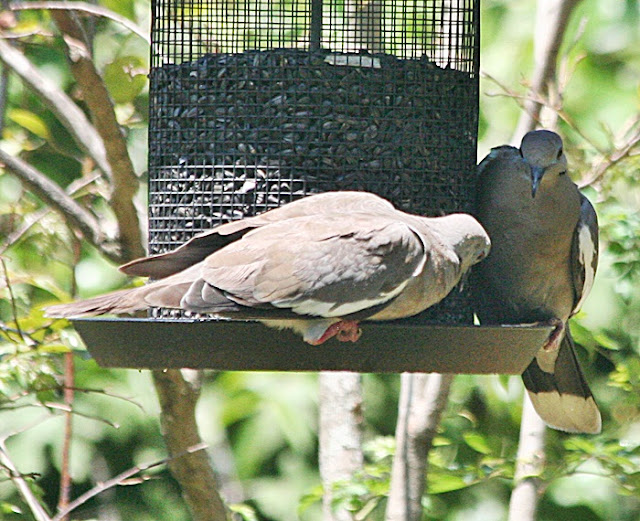
White-winged Doves have been prominent visitors to my bird feeders this week. When they come, they generally come en masse. It's not unusual to see 10-15 on the feeders or on the ground under the feeders at a time.

*~*~*~*

Lots of "hot" stories in the news this week:

- 2021 was the fifth hottest year on record according to scientists. The seven hottest years on record have occurred in the last seven years.

- How hot has Earth been during your lifetime? This link allows you to check that.

- For nearly a quarter of the planet's population, 2021 was actually a record hot year

- The waters of the Gulf of Maine spiked to record warm levels in autumn of last year. The gulf is warming faster than 96% of the world's oceans.

- This map shows where all-time record temperatures for both heat and cold were set in the United States during 2021.  

- In most of the country, winter is the fastest-warming season and that is bad news for biodiversity, water supply, and farm yield.

- While winters are warming, in the southern hemisphere where it is summer, South America is suffering through record summer temperatures as high as 113 Fahrenheit. 

- For the sixth consecutive year 2021 saw the hottest temperatures on record in Earth's oceans.

*~*~*~*

But in Antarctica, there is still plentiful habitat for icefish. In February 2021 a breeding colony of icefish comprising 60 million active nests across 92 square miles was discovered in the icy waters there.

*~*~*~*

The effort to save the endangered Puffin from extinction is being impacted by climate change and not in a good way.

*~*~*~*

U.S. greenhouse emissions were down in 2020 raising hopes that that might prove to be a new trend, but in 2021 emissions roared back, rising 6.2% compared to the previous year.

*~*~*~*

Birds have a variety of adaptations, both physical and behavioral, to help them maintain their body heat in cold weather. One of those is the ability to transform themselves into a spherical puffball as this Dark-eyed Junco illustrates. 

*~*~*~*

Do bottlenose dolphins engage in sex for pleasure? There seems to be some evidence to support a positive response to that question.

*~*~*~*

The Biden administration is working to restore energy efficiency standards that were weakened by the previous administration, but there are frustrating delays in being able to implement the reversals.

*~*~*~*

Margaret Renkl has an appreciation of snow.

*~*~*~*

And here's an appreciation of the biologist who refused to give up on the California Condor when only 22 were left in the wild. Thanks to her efforts the bird survives and now numbers more than 1,000.

*~*~*~*

Western Meadowlark, definitely worth protecting!

The Migratory Bird Treaty Act that protects birds has now been fully restored by the Biden administration. Now the effort is to enhance and increase those protections.

*~*~*~*

The nation's largest wind energy project is nearing completion in western Oklahoma.

*~*~*~*

In Mexico, the indigenous Mazahua people are dedicated to protecting the Monarch butterflies that winter in a reserve in their territory. They are so determined that they have formed armed brigades to protect against illegal logging. 

*~*~*~*

A study in Science Advances shows that Montana's warming climate is causing the native trout species to dwindle and is making it easier for invasive species to become established.

*~*~*~*

In a new policy established by the Environmental Protection Agency, the potential impact of new pesticide active ingredients on endangered species will be evaluated before they are registered.

*~*~*~*

In September of 2021, the U.S. Fish and Wildlife Service announced that it would remove 23 long-unseen species from the protection of the Endangered Species Act because "you can't keep protecting what's already gone." Among the species to be officially declared extinct is the "Lord God bird," the Ivory-billed Woodpecker.

*~*~*~*

The indigenous tribes that live around Lake Superior depend on fishing to survive, but the fish that they catch are now contaminated by "forever chemicals."

*~*~*~*

Mountain lions coexist with humans in and around the city of Los Angeles and one of the most famous of the lions is a thirteen-year-old animal called P-22. A cat believed to P-22 was recently videoed in a backyard near Griffith Park. He looks quite sleek and well-fed, doesn't he?

Thursday, January 13, 2022

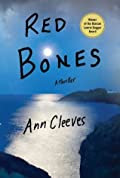
Red Bones by Ann Cleeves: A review


I enjoyed reading the second book in the Shetland series, White Nights, so much that I decided to head straight on into the third. So on to Red Bones. And these follow the first book in the series, Raven Black. I do believe I'm sensing a theme here.

This one features Jimmy Perez's colleague Sandy Wilson a bit more prominently. The action takes place on Whalsay Island where Sandy's family lives. His grandmother, Jemima (Mima) Wilson, is a bit of a recluse but she had agreed to allow an archaeological team to dig on her land. She had bonded with one of the young archaeologists digging there, a woman named Hattie. The team had made some interesting discoveries, including human bones, among them part of a skull. 

Sandy was supposed to visit his grandmother one night but when he went there she was not in her house. He went looking for her and discovered her body near the digs. She had been shot. He calls his boss, Perez, to report the death. Perez is not on the island and must get a ferry there.

Arriving on Whalsay and looking at the scene, Perez learns that a neighbor, one of Sandy's friends, had been out hunting rabbits with a shotgun the night before, using a light (which is illegal) to mesmerize the animals so that they could be shot. Mima had been shot with a shotgun. It is initially assumed that she was shot by accident. What possible reason could anyone have to kill her? Once again, Perez does not accept the easy assumption. There are some things about the incident that just don't add up for him.

The archaeological team, especially Hattie, are very distressed at Mima's death. Hattie's distress, in particular, seems a bit out of proportion. Later, she calls Perez and tells him she needs to speak with him urgently because she has information related to the death. By this time, Perez had left the island and asked her if she could tell him over the phone, but she insisted that she needed to speak in person. He agreed to return to the island but it would be the next day before he could get there. By the time he arrives, she's dead. Her body was found, also by Sandy, in one of the trenches of the dig. 

So, two deaths somehow related to an archaeological dig, plus a third death if we count the bones discovered at the site. It turns out some of the "red bones" are not ancient.  

Once again Cleeves has constructed a knotty conundrum to tease us and once again I didn't have a clue as to its solution. (Actually, there were clues; I just couldn't see them.) As usual, one of the strengths of the narrative is its description of the scene which evokes a sparse and misty landscape and the emptiness of the sea around it. I think I could become addicted to this series.

My rating: 4 of 5 stars

Wednesday, January 12, 2022

White Nights by Ann Cleeves: A review


The white nights of the title are a phenomenon of the far north in summer when the sun never entirely sets. A truly dark night does not happen, thus "white nights." It is a phenomenon that can be disturbing to human biorhythms, and one can understand how it might make some sensitive people just a little bit crazy. The phenomenon is just a part of life on the Shetland Islands.

Once again Ann Cleeves takes us there and the best part about this Shetland series of hers from my point of view is her evocation of the landscape, the culture, and people of the islands. Her main character, detective Jimmy Perez, is a creation of those islands and that culture and he understands very well the insular nature of the communities and the fact that things may move a bit more slowly here. This is highly irritating to the big-city detective, DCI Roy Taylor from Inverness, who is sent in to lead the investigation of the latest murder on the islands but he and Perez do manage to work together more or less amicably.

The story begins with an elaborate party thrown by artist Bella Sinclair to launch an exhibition of her works at The Herring House, a gallery on the beach. The gallery also features the work of Fran Hunter, the woman with whom Jimmy Perez has a romantic relationship, so Perez is present to support her. The party is disrupted when a mysterious male guest, after looking for a long while at one of the featured works, falls to his knees and begins sobbing. Perez goes to his aid and the man, who is English tells him that he doesn't know who he is and doesn't know where he came from or how he came to be there. Perez takes him outside and attempts to calm him but when he briefly goes back inside and then returns the man has disappeared. The next day his body is found hanging from the rafter in a boat shed. At first, it is thought to be a suicide but Perez is convinced it is murder. 

And, of course, he's right. It is murder. The first murder is followed shortly after by another, Bella's nephew Roddy. We follow Perez's and Taylor's investigation of these murders. Cleeves spins her puzzle out leaving clues along the way, clues that don't necessarily announce themselves to the reader as clues. This is the second book in the series and she is still also developing the character of Perez and the other detectives that he works with.  

The unraveling of the mystery regarding the two deaths leads to the solution to another mystery about a long-ago disappearance. A man had supposedly left the island on his own but his brother had never heard from him again. And now we learn why.

I did not solve this one until near the end. Cleeves really is a master at hiding those clues in plain sight. I look forward to continuing to read the books in this series.

My rating: 4 of 5 stars


Monday, January 10, 2022

Convenience Store Woman by Sayaka Murata: A review


I was so disturbed by the last book of Sayaka Murata's that I read, Earthlings, that it put me off reading this one. Consequently, this little gem had languished in my TBR stack for almost a year. But this is a new year and, determined to clear out my backlog of books to be read, I picked it up and began to read. Now I'm wondering why it took me so long.

Eighteen-year-old Keiko Furukura has never fit in anywhere, not in her family and not in school, because she has never been able to comprehend the rules of social interaction. She comes to understand that "The normal world has no room for exceptions and always quietly eliminates foreign objects. Anyone who is lacking is disposed of. So that's why I need to be cured. Unless I'm cured, normal people will expurgate me." She thinks of herself as that "foreign object" that needs to be "cured." She apprehends that in order to survive she needs to be able to mimic the social exchanges of those "normal" people. 

Her salvation comes when she finds a job at the local branch of the Smile Mart convenience store. At the store, she has a manual to guide her behavior. That manual lays out step by step, line by line, how she is supposed to behave with people. For the first time in her life, she becomes one of the team and finds purpose and contentment. 

She is so contented that she stays in that job for eighteen years. At age thirty-six though, her family as well as her coworkers at the store are expecting her to find a husband, settle down, and raise a family. And once again Keiko is facing the dilemma of trying to meet society's expectations.

Around this time, the store hires another one of society's misfits, a man who admits that he only took the job because his family is pressuring him to get married and he needs to search for a wife. He hates the store and is lackadaisical about the duties assigned to him with the predictable result that he is soon dismissed. Keiko who loves and identifies with the store cannot understand his attitude. But she needs a boyfriend in order to get her family off her back and so she and the man come to a mutually beneficial, if platonic, arrangement. So, how does it all work out? You'll have to read the book.

That won't take long because it is a short book, less than 200 pages. Quirky doesn't even begin to describe it! It really is a sweet story of the struggle of a person with a different psyche to understand what it is that society wants and expects from her. It's a sentiment that I think a lot of us can probably identify with. Haven't we all felt like misfits from time to time? The tone of the book is satirical and wry and as well as being a personal story, it seems to be a commentary on class and gender inequity in Japan and the problems that that engenders. Society values conformity and, as Keiko observed, it doesn't tolerate "foreign objects."

An interesting side note is that the author wrote this book while she herself was working in a convenience store, and, apparently, she still works there part-time. Since the work helped to inspire this wonderful little book, I'd say it is time well-spent.

My rating: 5 of 5 stars

Saturday, January 8, 2022

Poetry Sunday: New Day's Lyric by Amanda Gorman

One of the most memorable moments in the inauguration of President Biden last year was provided by the young poet Amanda Gorman when she read her poem "The Hill We Climb." Since then, she has published a new book of poetry that ended up on the best sellers' list, a rare place for poetry books. 

Here is her new and inspirational poem, "New Day's Lyric," in which she reminds us that "wherever we come together we will forever overcome." 

New Day's Lyric

by Amanda Gorman

May this be the day
We come together.
Mourning, we come to mend,
Withered, we come to weather,
Torn, we come to tend,
Battered, we come to better.
Tethered by this year of yearning,
We are learning
That though we weren’t ready for this,
We have been readied by it.
We steadily vow that no matter
How we are weighed down,
We must always pave a way forward.

This hope is our door, our portal.
Even if we never get back to normal,
Someday we can venture beyond it,
To leave the known and take the first steps.
So let us not return to what was normal,
But reach toward what is next.

What was cursed, we will cure.
What was plagued, we will prove pure.
Where we tend to argue, we will try to agree,
Those fortunes we forswore, now the future we foresee,
Where we weren’t aware, we’re now awake;
Those moments we missed
Are now these moments we make,
The moments we meet,
And our hearts, once all together beaten,
Now all together beat.

Come, look up with kindness yet,
For even solace can be sourced from sorrow.
We remember, not just for the sake of yesterday,
But to take on tomorrow.

We heed this old spirit,
In a new day’s lyric,
In our hearts, we hear it:
For auld lang syne, my dear,
For auld lang syne.
Be bold, sang Time this year,
Be bold, sang Time,
For when you honor yesterday,
Tomorrow ye will find.
Know what we’ve fought
Need not be forgot nor for none.
It defines us, binds us as one,
Come over, join this day just begun.
For wherever we come together,
We will forever overcome.

Friday, January 7, 2022

This week in birds - #483

A roundup of the week's news of birds and the environment:

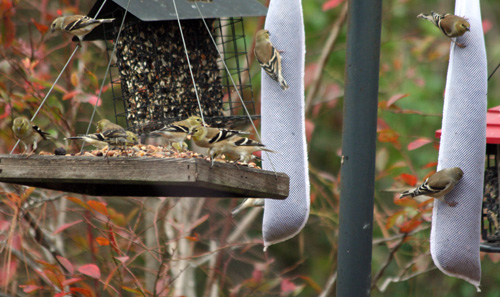
This is the first week that American Goldfinches have shown up at my feeders - or maybe just the first week I've seen them there. This picture was actually taken a couple of years ago. I haven't seen this many yet but they will likely come.

*~*~*~*

The Revelator has identified six big environmental stories that bear watching in 2022.

*~*~*~*

Clean drinking water is at a premium in so many parts of the world. The problem in most cases is an inadequate infrastructure. A water bottle company has one possible solution to the problem.

*~*~*~*

The Arctic region's air does not generally engender lightning strikes, but there has been a drastic rise in such strikes due to the warming air caused by climate change. Scientists find the change worrying. 

*~*~*~*

Twenty wolves have been killed after wandering outside of Yellowstone National Park where hunting is prohibited. Now, only 94 remain in the park, but the hunting season is still on in Montana and conservationists expect even more of them to be killed.

*~*~*~*

This is a Brazilian bird called the Cherry-throated Tanager. It is critically endangered but there is hope for its survival. A partnership of conservation organizations has established a 704-acre protected area of Brazilian Atlantic Forest as a reserve for the little bird.

*~*~*~*

In 2021, 205 new plant species were named by botanists around the world. The newly identified plants are vital parts of the planet's biodiversity and may have benefits as yet unknown.

*~*~*~*

The elusive Australian Night Parrot was thought to be extinct for nearly 140 years until it was discovered again in 2013 by a naturalist whose credentials were a bit questionable. In fact, he had found the parrot but faked the evidence of it. However, its existence has later been confirmed by others with actual pictures like this one:

Australian Night Parrot.

*~*~*~*

Red wolves, likewise, were declared extinct in 1980, but it seems remnants of the species have been hiding in plain sight. The "ghost wolves" of Galveston Island are canid mixtures of coyote and red wolf DNA. Their appearance is distinctly different from the average coyote.

*~*~*~*

The Endangered Species Coalition has produced a list of "last chance" species that are endangered by climate change. The top ten list for North America includes birds, mammals, reptiles, plants, and one butterfly, the Monarch.

*~*~*~*

In an innovative plan, England's farmers are being paid to rewild their land. The plan should result in large tracts of land being managed to conserve species, provide habitats for wildlife, and restore health to rivers and streams. 

*~*~*~*

Forest management methods such as controlled burns can play an important role in limiting the damage caused by wildfires. The Bootleg fire in Oregon last year provided concrete evidence of that.

*~*~*~*

That wandering Steller's Sea Eagle that was reported here last week turned up to give birders in Maine a thrill this week. Here he is pictured with two immature Bald Eagles

*~*~*~*

Conservation is clashing with development (doesn't it always?) at the Komodo National Park in Indonesia. The park was established in 1980 to protect the giant lizards.

*~*~*~*

Some of the grizzlies in Yellowstone National Park are moochers. They join the chase of the wolf packs there and then steal their kill from them. They are kleptoparasites.

*~*~*~*

The rapidly warming Arctic is giving rise to another environmental change in addition to the aforementioned lightning. Beavers are moving north with the warming climate and their dams will likely have an important effect, good and bad, on the Arctic environment.

*~*~*~*

A search is underway to find some of the rarest birds on Earth. The Search for Lost Birds is a collaborative effort of several conservation groups.

*~*~*~*

A study of hedgehogs has revealed that the battle between fungus and bacteria living on their skins led to the emergence of a strain of MRSA (methicillin-resistant staphylococcus aureus) that can infect cows and humans.

*~*~*~*

Scientists use satellite technology to monitor the health of peat bogs which are vital carbon sinks. They use the information gleaned to help protect and restore them.

*~*~*~*

Brazilian scientists are alarmed about a drastic increase in deforestation in the world's most diverse savanna.

*~*~*~*

There are forests and then there are forests. In North American forests not all trees are created equal. The mighty white oak pulls much more than its weight.

*~*~*~*

On San Juan Island, 2021 was the Year of the Foxes, and here is the photographic evidence.

Thursday, January 6, 2022

The President and the Frog by Carolina De Robertis: A review


What a pleasure this book was to read. I'm not sure why it took me so long to get to it for it had been in my reading queue for months but finally, I picked it up as my very last read of 2021 and it turns out it was a great way to close out the year. 

It is a short book at only around 220 pages so one could almost read it in one sitting if one had nothing else to do. Carolina De Robertis packs quite a lot into those few pages. She gives us the story of an 82-year-old man who is the former president of a South American country that is never actually named but is assumed to be Uruguay. He is about to be interviewed by a television journalist from Norway and as he waits for her he reflects on his life and on the part of it that he does not want to reveal to anyone. That secret part is his relationship with a frog.

As a much younger man, the former president had taken part in an attempted revolution against the autocratic government that was then in power. The attempt was unsuccessful and many of the revolutionaries, including him, were captured and imprisoned in solitary confinement for years. His cell for the first four years was a hole in the ground with a grate covering part of the top through which food was lowered to him each day and through which he was extracted from time to time for "questioning," i.e., torture. His only light came through that grate and his only companions at first were the spiders and bugs that found their way into his hole, but finally, another creature joined him there: a frog.

This was no ordinary frog. For one thing, he could talk. He was, in fact, a philosopher frog, a snarky and prescient frog, and he and the future president had many long conversations about life and its meaning. They talked about the quest for justice and dignity and what it means to love a country. Those conversations are full of irony and satire as they reflect on politics, on the disparities endemic in society, and the systemic racism that seems so hard to root out. Their conversations are sometimes funny, sometimes moving, but always insightful. And they are a secret that the ex-president has carried with him for more than forty years.

The interview with the journalist takes place in 2016 after the presidential election in the United States and that, too, comes up in the conversation. The ex-president marvels at the idea that a country could freely elect such an ignoramus to be its leader. 

This is the third of De Robertis' books that I have read after The Gods of Tango and Cantoras and I think it may be my favorite. It is very different from the other two books but it has in common with them her brilliant insights into what it is to be human. It is part historical fiction and part fable and she ties all of that together beautifully with masterful writing. The technique she employs is to flash back and forth through time as we witness the interactions with the frog who urges the man to dig deep and find "the One Thing" and the conversation with the interviewer who expresses concern about the ramifications of climate change and of the American election. The result of comparing and contrasting the two conversations is to give us a sense of the indomitable human spirit that finds hope and optimism even in the face of the grimmest reality.

It's difficult to adequately describe this novel. There isn't much of a plot and one can't really say it is character-driven. The "action" takes place entirely in the head of the main character, as we are privy to his thoughts and memories. It's not a book that everyone would enjoy, but I loved it and I'm just glad I finally got to it at the end of the year.

My rating: 5 of 5 stars  


Tuesday, January 4, 2022

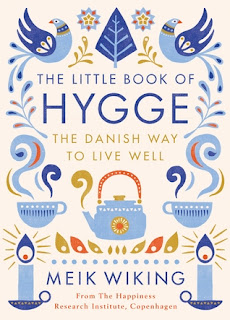
The Little Book of Hygge by Meik Wiking: A review


I chose this book as my final read of 2021. It turned out not to be that because I managed to squeeze another in, but this one was chosen as a comfort read. It is literally about comfort. Coziness, happiness, being comfortable in your own skin and appreciating the life you have. Doesn't that sound like a positive note on which to end the year?

The author of the book, Meik Wiking, is the CEO of the Happiness Research Institute in Copenhagen. (Yes, apparently there is such a thing!) Whenever there are polls about which country is the happiest, Denmark inevitably ends up at or near the top so it is appropriate, I guess, that the Happiness Research Institute is located there. 

And what are the things that Danes associate with this feeling of happiness? Wiking lists them from most to least important as follows: hot drinks, candles, fireplaces, Christmas, board games, music, holiday, sweets and cakes, cooking, and books. I find it interesting that at least half those things are related to light or food. I also find it interesting that books are last. Oh, well, at least they made the list.

Danes spend a disproportionate amount of their income on lighting and some of their most popular designers are designers of lamps or other lighting. They are also the world's highest consumers of candles. They light them daily to create a mood throughout much of the year.

They love indulging their sweet tooth. For example, they consume twice the amount of sweets as other Europeans. And they love cooking. Their pleasure comes from the process of preparing food and if it is complicated and takes a long time, so much the better!

They prefer casualness in their dress and in their home furnishings. Their clothing tends to rely on soft natural fabrics like wool. Danish furniture is simple in style and uses a lot of wood in its designs. Tactility is very important to them.  

Hygge, in short, is a word that implies indulging all the senses. It's what makes us feel cozy. Now, all of that could be said in one short sentence, but Meik Wiking does go on and on about it. Not that the book is that long at less than 300 pages, but after a while, it started to feel like War and Peace to me. Except that War and Peace is not endlessly repetitive. The writer basically states the same idea over and over again in as many different ways as he could come up with. And I pretty quickly lost patience with him. I ended up skimming most of the book, seeing if there was any new idea there that I needed to concentrate on. There wasn't. 

My rating: 2 of 5 stars