Translate

Saturday, February 26, 2022

Poetry Sunday: Love Ukraine by Volodymyr Sosiura

This poem by Ukrainian poet Volovymyr Sosiura was published in 1944 near the end of another war. As I went looking for a poem that might express my concern for that embattled country, I found this and it seemed perfect for the moment. Two lines in particular resonated with me:
For other races you’ll not love hereafter
Unless you love Ukraine and hold her high.

The message seems to be that one must love one's own country before one can love any other. But this week let us do whatever small act we can to "Love Ukraine."  

Love Ukraine

by Volodymyr Sosiura
(Translated by C.H. Andrusyshen and Watson Kirkconnell)

Love your Ukraine, love as you would the sun,
The wind, the grasses and the streams together…
Love her in happy hours, when joys are won,
And love her in her time of stormy weather.

Love her in happy dreams and when awake,
Ukraine in spring’s white cherry-blossom veil.
Her beauty is eternal for your sake ;
Her speech is tender with the nightingale.

As in a garden of fraternal races,
She shines above the ages. Love Ukraine
With all your heart, and with exultant faces
Let all your deeds her majesty maintain.

For us she rides alone on history’s billows,
In the sweet charm of space she rules apart,
For she is in the stars, is in the willows,
And in each pulse-beat of her people’s heart,

In flowers and tiny birds, and lights that shine,
In every epic and in every song,
In a child’s smile, in maidens’ eyes divine,
And in the purple flags above the throng…

Youth! For her sake give your approving laughter,
Your tears, and all you are until you die…
For other races you’ll not love hereafter
Unless you love Ukraine and hold her high.

Young woman! As you would her sky of blue,
Love her each moment that your days remain.
Your sweetheart will not keep his love for you,
Unless he knows you also love Ukraine.

Love her in love, in labour, and in fight,
As if she were a song at heaven’s portal…
Love her with all your heart and all your might,
And with her glory we shall be immortal.
Friday, February 25, 2022

This week in birds - #490

(NOTE TO MY READERS: I have been forced to enable comment moderation on my blog because of a particular entity that has repeatedly attempted to post comments advertising their online gambling site. You can be assured that any legitimate comment will be posted as soon as I can get to it. I always appreciate your responses to my posts.)

A roundup of the week's news of birds and the environment

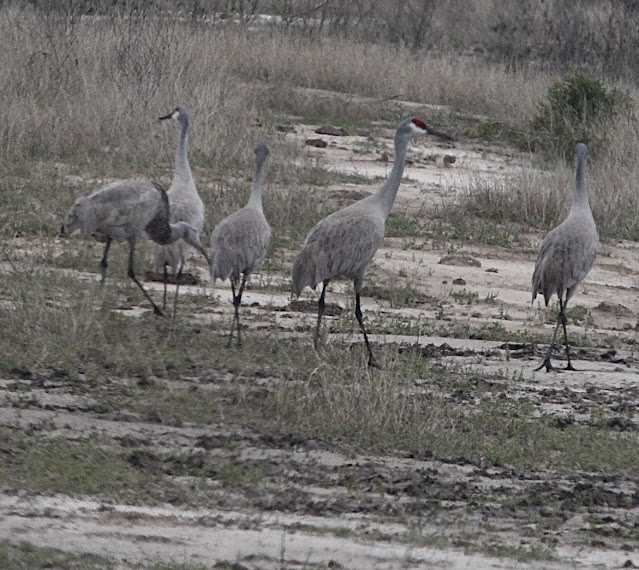
Sandhill Cranes out for a stroll on a Gulf Coast afternoon.

*~*~*~*

The Supreme Court has rejected an appeal from the operator of the Dakota Access pipeline to have the refusal of the pipeline's key federal permit overturned.

*~*~*~*

The Biden administration has paused approval of any new leases or permits for oil or gas drilling on federal lands after a judge ruled they could not consider the societal costs of carbon emissions when making the decision.

*~*~*~*

Climate refugees from the worst drought in Angola in forty years continue to stream into neighboring Namibia.

*~*~*~*

This month the U.N. member states are set to draft a blueprint for a global plastics treaty that would restrict the production and use of single-use plastics. The companies that make such plastics are attempting to prevent the treaty's acceptance.

*~*~*~*

Climate scientists are warning that the worsening of heat and drying conditions could lead to a 50 percent increase in the number of wildfires and create a global wildfire crisis.

*~*~*~*

The efforts of the previous president to build a wall along our southern border have predictably left a mutilated landscape which the present administration is making plans to remediate

*~*~*~*

"Reef ball burials" are now a thing. You can choose to have an underwater cremation memorial that helps to regenerate marine habitats. And thus you can be transformed into coral.

*~*~*~*

India's forest rangers risk their lives braving tigers and other dangers to protect the forests in their care as they try to keep the peace between humans and wildlife.

*~*~*~*

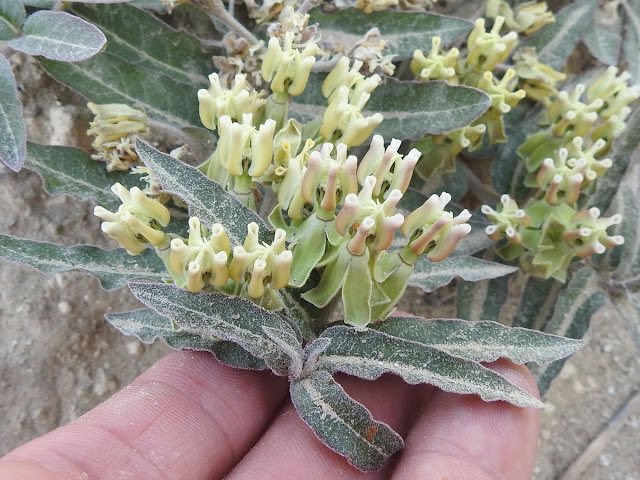
This is prostrate milkweed, a rare plant that is native to Texas and Mexico and may soon be listed as an endangered species.

*~*~*~*

GPS tracking devices have many uses and now California beekeepers are using them to safeguard their honeybees and thwart would-be thieves. Apparently, theft has become a major problem for the beekeepers.

*~*~*~*

Mangrove forests, in addition to protecting the coastlines, are home to an amazing variety of species and that, somewhat surprisingly, includes insects.

*~*~*~*

Artificial intelligence (AI) is being employed by scientists to help mitigate climate change and protect species around the world.

*~*~*~*

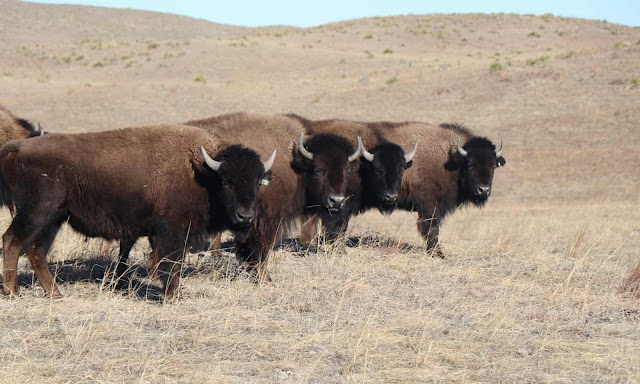
Bison, commonly called buffalo, on the Wolakota Buffalo Range in South Dakota.

The Rosebud Sioux nation of South Dakota is using its large herd of buffalo, now numbering 750, to help with food security in the nation and to restore the land

*~*~*~*

Two controversial mining concessions in Mexico were canceled by that country's Supreme Court which ruled that the residents had not been consulted.

*~*~*~*

Do fish talk to each other? It seems that perhaps they do with a series of hums, honks, and boops. And what do they chat about? Sex and food, apparently.

*~*~*~*

Mt. Etna is one of the most active volcanoes in the world and it is currently spouting off again. A 12-kilometer high ash cloud has been visible over the mountain this week. 

*~*~*~*

Scientists speculate that the asteroid that hit Earth 66 million years ago and wiped out about three-fourths of the planet's species may have hit in the springtime when it would have been the most destructive of life.

*~*~*~*

The forests of the Congo are one of the planet's greatest natural resources. They are protected by the "Guardians of the Forest." 

*~*~*~*

The horseshoe crab today looks much the same as its forebears in the Mesozoic Era. And now it finds itself in the middle of a scientific controversy that seeks to reclassify it to the family tree of arachnids, along with the spiders and scorpions.

*~*~*~*

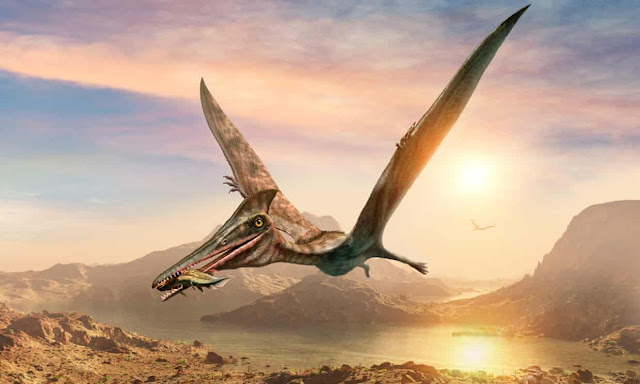
On the Isle of Skye, best known for its otters and Puffins, the remains of an enormous flying reptile from the Jurassic Era have been found. It was a pterosaur with a wingspan wider than a kingsize bed and it lived some 170 million years ago, about 25 million years earlier than they had been thought to reach such great size. Here is an artist's conception of the great beast:


*~*~*~*

Have you heard about Hank the Tank, the black bear that has been crashing properties around Lake Tahoe in search of food? Well, it seems that DNA tests have now confirmed that there is not just one Hank but at least three bears (maybe more?) that have been guilty of the break-ins. 


Wednesday, February 23, 2022

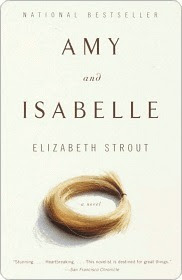
Amy and Isabelle by Elizabeth Strout: A review


This was Elizabeth Strout's debut novel, published in 1998. In it, she explores the fraught relationship between a single mother and her teenage daughter in the mill town of Shirley Falls. Isabelle, the mother, works in the office of the mill, as secretary to the boss, Avery Clark. Clark is married but Isabelle harbors some forlorn hope of establishing a romantic relationship with him. It's been many years since she had such a relationship. The other employees in the office see Isabelle as aloof and not "one of the girls."

Isabelle's relationship with her daughter, Amy, has always been a good one until Amy hits her teenage years. Then she begins to be critical and disdainful of her mother. When she is sixteen, her math teacher has a health crisis and is replaced by a substitute, Mr. Robertson. Robertson often singles Amy out in class and because of her beautiful golden hair tells her that she looks like a poet. Amy is entranced and develops a huge crush on the man. He is not unaware of her feelings and takes advantage of them to begin grooming her for a relationship. He starts driving her home from school and soon progresses to kissing her goodbye.

The Amy and Robertson relationship takes its expected course and one day while they are parked in a car on an out of the way lane, they are discovered by Isabelle's boss. He reports this to Isabelle with a great deal of embarrassment and she confronts Robertson and threatens to report him to the police since her daughter is underage. When she returns home, she cuts off Amy's glorious hair in a fit of rage. The rift between them seems complete.

During the summer, while one of the women at Isabelle's office is on medical leave, her boss agrees to hire Amy as a replacement for the summer. They have to at least pretend to get along to keep up appearances at the office, but all of the events of the past months take their toll and Isabelle begins to reflect on the circumstances of Amy's birth. We learn that she, as a teenager, was also groomed by a man who had been a friend of her deceased father and she became pregnant by him which derailed her plans for college and, in fact, all her plans for her life. Now, in her loneliness, she begins to reach out to her fellow employees and to develop bonds with them.

I think anyone who has ever been a daughter or a mother of daughters can identify with some of the stresses of Isabelle's relationship with her teenage daughter. It is seldom easy even under the best of circumstances and being a single mother with no family and few friends to support her hardly qualifies as the best of circumstances.

In this her first novel, the qualities that have made Elizabeth Strout such a successful writer are on full display. Her writing shows a wisdom about and an empathy for the human condition. She seems to have a deep affection for all of her characters and to take pleasure in making them known to us. She writes about ordinary people in their everyday lives and makes us empathize with them and hope that they will somehow find that sought for happily ever after future. This was a sterling beginning to her career as a published writer of fiction and nothing that she has published since has tarnished that sterling promise.

My rating: 5 of 5 stars      

Ladder of Years by Anne Tyler: A review


For a brief time after I graduated college, I lived and worked in Baltimore. Whenever I read an Anne Tyler novel she takes me back there. She describes the city and its people so perfectly, I feel as though I'm walking those streets, riding those buses again. The house where Delia (short for Cordelia) lives with her family might be the house where I roomed while I lived there.

When we meet Delia, she is forty years old and has been long married to Sam Grinstead. They have three children, the youngest of whom is fifteen. Sam is a doctor who still makes house calls, like Delia's father before him.  The house they live in is the house that Delia grew up in and where Sam came to be her father's assistant when she was only seventeen.

Delia has two sisters, Eliza who has never married and Linda who is now divorced and has two young daughters. They all vacation together at the beach every year. It is a family tradition, but at age forty as she sits on the beach during their annual trip, Delia is feeling more and more distant from that family. Everything that her husband does seems to annoy her and after a disagreement with him, she walks along the beach and just keeps walking. She has left everyone behind without a word.

Delia hitches a ride with a truck driver to a new town, Bay Borough. There she found a room in a boarding house and got a job and set out to make a new life for herself. It's never really clear why she did this, other than, as she says at one point, she just liked the idea of starting again from scratch. But abandoning your family without a word and deciding to go it alone does seem a rather momentous response to a random feeling of ennui.

On the other hand, her family seemed a bit desultory in their attempts to find her. Apparently, they went on with their lives as before. Eventually, they do find her more than a year later but decide to leave her alone and not insist on her return. In the meantime, she has made that new life for herself, working as a housekeeper for a divorced man and his son. They have come to depend on her and think of her as an essential part of their family. 

When her daughter decides to get married, Delia is invited to the wedding and she goes. Will she stay? Will she abandon her "new family" to return to her old one? And what about the cat? Oh, yes. I forgot to mention an important character. Delia had adopted a stray cat as part of her new life.

This is a book about choices and how we make them. And the overall message seems to be that often we don't "make" them. We just slide into them without really thinking them through. We act on the spur of the moment and then find it hard to retrace our steps.

Anne Tyler always writes with such grace. In reading her words, we feel "Of course. How could it have been otherwise?" Her stories unfold with a certain passivity and inevitability. In this particular instance, I did not find much to like about any of her characters. The most likable of the lot were the father and son for whom Delia worked as housekeeper. I would have liked to spend more time with them.

My rating: 3 of 5 stars

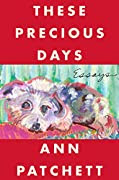
These Precious Days by Ann Patchett: A review


I grabbed this book on a whim in the mistaken perception that it was a novel by Ann Patchett. Yes, even though it says "essays" right there on the cover! Obviously, I was not paying close attention. I don't often read essays and if I had realized that's what it was I probably wouldn't have gotten it. That would have been a mistake. It was a terrific read.

Her essays touch on a wide variety of subjects, mostly very personal. She writes, for example, about her three fathers. Her mother married three times. Ann was born in her first marriage to an L.A. cop. That cop was very dismissive of Ann's aspirations to be a writer. His ambition for her was to be a dental hygienist. This had the unintended effect of making her even more determined to become a writer and to succeed at her craft. 

While Ann and her sister were still young children, her mother, who was a nurse, fell in love with a surgeon. When he moved to Nashville, she followed him there and they were married. Her new stepfather, the surgeon, had really wanted to be a writer. Ann writes that he thought she "was the second coming of Christ."

Both her father and her first stepfather played central roles in her life. Her father's influence was instrumental because it caused her to rebel against the life that he thought she should have, while her stepfather really wanted to be like her. He wanted to be a writer and was supportive of her aspirations. Her mother later married for a third time when Ann was 27 but that stepfather came into her life after she was an adult and had less influence on her life choices. 

Ann, too, divorced her first husband and after eleven years of dating, married her second, Karl, who is a medical doctor with a master's in philosophy and theology at Oxford. He is sixteen years older than she. She has no children and that was apparently her choice. She writes: "To have a child required the willful forgetting of what childhood was actually like; it required you to turn away from the very real chance that you do to the person you loved most in the world the exact same thing that was done to you. No. No, thank you."

She recalls a national radio show on which she was interviewed and was asked about her childlessness. The interviewer pointed out that her husband was quite a bit older than she and that the chances are that she would be left alone at the end of life. The interviewer asked if she worried about that. Ann pointed out that Jonathan Franzen does not have children either and wondered whether the interviewer would have asked him the same question. (Let me guess: No, he wouldn't have!)

Not all of the essays are so serious. She writes of her friendships and of her experience in owning a bookstore which has been one of the greatest joys of her life. But the title essay, "These Precious Days," details her friendship with a woman named Sooki who she met through Tom Hanks. Sooki was his assistant. The essay tells a bittersweet story - no spoilers here in case you want to read the book.  

My conclusion on finishing the book was that the title was perfect. The days that Patchett relates to us were precious indeed and she describes them so straightforwardly without unnecessary embellishment. Her writing might be described as spare, unadorned, but it seemed just about right to me.

My rating: 4 of 5 stars

Monday, February 21, 2022

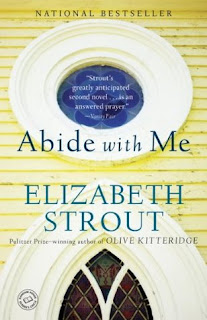
Abide With Me by Elizabeth Strout: A review


Elizabeth Strout's second novel, Abide with Me, was published in 2006. It tells the story of Tyler Caskey, a young minister in the fictional town of West Annett, Maine. His wife died about a year before, leaving him with two small daughters. The younger of the two, Jeannie who is still a baby, is being cared for by Tyler's mother in her home. The older child, Katherine, is around four years old when we meet her and lives with her father but has obviously been traumatized by her mother's death and is very antisocial both at school and at home. Tyler is thus dealing with his own grief and sense of loss as well as trying to be a responsible father to two daughters and meet his responsibilities at the church. In other words, he has his hands full.

As Tyler struggles, rumors spread in the community about Katherine's problems and of a suspected affair between Tyler and his housekeeper, Connie Hatch. It all starts in the church's Ladies' Aide Society which seems to have as its main purpose to serve as a clearance center for all the juicy gossip of the community. The members of the group hover over Tyler which only serves to increase the pressure on him. Soon enough his grief begins to turn to anger and his depression grows making it extremely problematic whether he can minister to his congregation and be the parent that his troubled daughter needs.

The time is the 1950s and the clouds of the Cold War hang over everything. Meanwhile, talk of Freud's theories about hidden sexual motivations driving human nature is all the latest rage. Amid these unsettled times in society and the challenges of his personal life, Tyler tries to cling to his faith and he takes comfort in the writing of Dietrich Bonhoeffer and his experiences of attempting to transform a faith community in Germany in World War II. 

Strout details in a straightforward way Tyler's attempts to rise above all the gossip and the petty concerns of his church board and congregation and to remain true to the calling that led him to become a minister in the first place. At times this becomes a thoroughly depressing story but ultimately there are breakthroughs both on the personal level and with the congregation that speak to the resilience of the human spirit and the ability to overcome adversity.

The writer's characterizations are completely believable. I think we have probably all known people like Tyler and indeed like some of the bitchier gossipers in his congregation. Tyler is on many levels endearing, if naive. In his own way, he strives to be perfect but falls short, as we all must.

The book's climax leaves the reader with some hope that things will eventually work out for the rebuilt Caskey family. But it is in no way a neat and tidy conclusion and we have to acknowledge that things could actually go either way from here. Tyler is a good guy and we hope for the best for him.

My rating: 4 of 5 stars

Saturday, February 19, 2022

Poetry Sunday: Caged Bird by Maya Angelou

When our kids were little, we had parakeets. They were lovely birds and fun to watch, but at some point, I couldn't bear to have a caged bird anymore. Perhaps it was because I had read Maya Angelou's poem.  

Caged Bird

by Maya Angelou 

The free bird leaps
on the back of the wind
and floats downstream
till the current ends
and dips his wings
in the orange sun rays
and dares to claim the sky.

But a bird that stalks
down his narrow cage
can seldom see through
his bars of rage
his wings are clipped and
his feet are tied
so he opens his throat to sing.

The caged bird sings
with fearful trill
of the things unknown
but longed for still
and his tune is heard
on the distant hill
for the caged bird
sings of freedom

The free bird thinks of another breeze
and the trade winds soft through the sighing trees
and the fat worms waiting on a dawn-bright lawn
and he names the sky his own.

But a caged bird stands on the grave of dreams
his shadow shouts on a nightmare scream
his wings are clipped and his feet are tied
so he opens his throat to sing

The caged bird sings
with a fearful trill
of things unknown
but longed for still
and his tune is heard
on the distant hill
for the caged bird
sings of freedom.

Friday, February 18, 2022

This week in birds - #489

A roundup of the week's news of birds and the environment

Black Skimmer resting in the Gulf Coast waters.

*~*~*~*

It's the weekend of the annual Great Backyard Bird Count. This is the count's twenty-fifth year. Are you counting and if not, why not? Anyone can participate. No particular expertise is required.

*~*~*~*

More people along the U.S. coastline are being exposed to rising sea levels where the levels are rising faster than the global average. It is expected that they will rise as much as one foot within the next thirty years.

*~*~*~*

A convergence of dangerous weather conditions exacerbated by the climate crisis will expose southern California to an increased threat of wildfires over the coming decades, according to a new study.

*~*~*~*

One thing that might increase the risk of wildfires is the megadrought that has ravaged the West for the last two decades. A new study states that this is the most extreme drought for that area in at least 1200 years and human-caused climate change is a significant driver of the conditions.

*~*~*~*

Some areas experience drought while others have devastating floods. That has been the case this week in Brazil where historic rains and mudslides have killed at least 117. 

*~*~*~*

Almost half (46%) of the Bald Eagles that were sampled from California to Florida have shown harmful levels of toxic lead in their bones.

*~*~*~*

A new study has found that the countries of the world are spending at least $1.8 trillion a year on subsidies that are driving the extinction of wildlife and contributing to a rise in global warming. Humanity is thus financing its own extinction.

*~*~*~*

Climate change in the Arctic is causing melting glaciers, thinning sea ice, and thawing massive swaths of permafrost, thus releasing more methane, a gas that heats the planet eighty times more than CO2.

*~*~*~*

One way that we can protect the only planet on which we have to live is to protect its trees that help produce the oxygen which we must have.

*~*~*~*

Africa contains nearly half of the world's gold and one-third of all its minerals. Here is a map that shows where they are found.

*~*~*~*

The progress of global warming can be seen in the dramatic spread of native plants over Antarctica during the past decade. The fragile polar ecosystem is changing and that is not a good thing.

*~*~*~*

The Mayan civilization was the first in the Americas to have widespread use of writing and use of calendars. Because of that, quite a bit is known about them and it seems that climate change may have contributed to their downfall. Is there a lesson there for us?

*~*~*~*

Gray wolves have regained some protection of law but it is not absolute.

*~*~*~*

And speaking of protected wildlife, Los Angeles loves its "Brad Pitt of mountain lions," Griffith Park's most famous feline. 

*~*~*~*

The iconic wildlife of Australia is its koalas but habitat loss, drought, and wildfires in 2019 and 2020 have contributed to a decline in their numbers. Now they have been given endangered species status

*~*~*~*

From the world of archaeology comes this six-inch tall figurine, possibly a part of an early Scandinavian weight system.

*~*~*~*

Tiny vaquita porpoises are critically endangered. There may be fewer than ten of them left. How can they possibly be saved? Well, scientists are giving it their best shot.

*~*~*~*

To save the planet, it is imperative that the world's forests be saved. But climate change is already having a serious impact on the world's boreal forests.

*~*~*~*

A U.N. environmental report published this week states that pollution is causing more deaths than COVID-19. Immediate and ambitious action is needed to ban some toxic chemicals.

*~*~*~*

The blue oak woodlands of California are being stressed to the point of extinction by changes to the environmental conditions in which they live.

*~*~*~*

Have you ever witnessed a lizard dropping its tail? I have and it is quite a dramatic sight. In the instance I am remembering, the lizard in question was under attack by a hen, and all of a sudden its tail fell off and continued to wriggle and was quickly gobbled up by the hen while the lizard made its escape. Sacrificing an appendage, known as autotomy, is a common defense among several species in addition to lizards. 


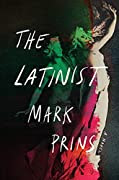
The Latinist by Mark Prins: A review


(I am falling seriously behind with my reviews so, in an attempt to catch up, my faithful readers get a bonus this week.)

I'm always a sucker for the classics. Anything with a Latin or Greek connection appeals to me, so obviously, I'm going to grab a book called The Latinist. It was a good move. It proved to be quite an entertaining read. The book turned out to be a suspense novel involving classicists. Clever, huh?

Tessa Templeton is a Ph.D. candidate in classics at Oxford. She is ready to seek a job in the world of academe and her mentor, Professor Christopher Eccles, has written a letter of recommendation for her. Except that, as Tessa learns thanks to an anonymous informer, the letter doesn't exactly recommend her. It's a classic case of damning with faint praise. Very soon we learn that Eccles' motive in writing such a letter is to keep Tessa at Oxford. He wants her only chance for employment in her field to be at that university because it is where he is and he is obsessed with her.

Tessa is a rising star in the arcane world of classics. She has just had a paper accepted for publication and her monograph is under consideration for publication by Oxford University Press. So, it is very odd that none of her applications for employment have resulted in job interviews while many lesser qualified candidates are being given interviews every day. When she sees a copy of the letter that Eccles wrote, she at first thinks it was a practical joke but then she comes to understand that he has effectively sabotaged her. How will she overcome his attempt to keep her close to him and under his control? She has to outthink him.

We quickly come to understand that these two characters are actually mirrors of each other. Each of them is monomaniacally dedicated to research in their field to the extent that, in Tessa's case, she chooses to miss her boyfriend's father's funeral in order to attend an academic conference. He doesn't stay her boyfriend for very long but she has demonstrated that she has the lack of moderation to be a serious player in the fight to get tenure.  

Tessa's expertise is in the field of obscure Roman poets but she is also a scholar of some renown on the Daphne and Apollo myth, the one where Daphne escapes ravishing by Apollo by transforming herself into a laurel tree. The Latinist is, in fact, a modern retelling of that story with Tessa as Daphne and Eccles as Apollo. Tessa's plan to escape Eccles' grasp leads her to join an archaeological dig at Isola Sacra near Rome. It proves an excellent decision when she makes a spectacular find in a necropolis that just may allow her to escape from under her mentor's thumb.

Prins' retelling of Daphne and Apollo is quite an evocative and mesmerizing bit of writing. It held my attention throughout and I found it hard to put down. I guess my only complaint about the book would be that both of the main characters are just about equally unlikable. Not that a book must have likable characters but it does help to invest the reader in the story. The ending of this one is startling and reminded me a bit of Alfred Hitchcock. He, too, often managed to give his tales a surprising twist.

My rating: 4 of 5 stars 


Wednesday, February 16, 2022

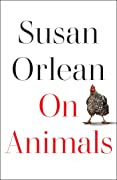
On Animals by Susan Orlean: A review


The essays that comprise Susan Orlean's latest book were written over a period of more than twenty-five years. They all appeared first in The New Yorker and those who have been readers of that magazine over that time may recognize some of them. My memory in its present state is such that even if I had read them before, I likely would not have recognized them. And some of them are pretty memorable.

For example, there is the one about Keiko, the captive killer whale who starred in the movie "Free Willy." The essay is about efforts to free Keiko and it begins like this: "It was a hell of a time to be in Iceland, where the wind never huffs or puffs but simply blows your house down." How can you not be captivated by such a beginning?

This book isn't only about big and famous animals, however. There are chickens here, and rabbits, pigeons, pandas, tigers, lions, donkeys, mules, and oxen. And that's probably not a complete list. 

One of my personal favorites was the essay about keeping backyard chickens. I was especially delighted to learn that this famous writer for an urban publication did this for I am not unfamiliar with the pleasure of having chickens around. Those who think of them as stupid, ditzy creatures have never spent much time with them. They each have their own unique personalities and they arrange themselves in definitive social structures. The chicken yard is not all that dissimilar to human society.

Another of the essays deals with a backyard in New Jersey where a woman kept twenty-three - twenty-three! - pet tigers. The remarkable thing (in addition to all those tigers) is that her neighbors had no idea they were there until one of them escaped.

There is not a dull essay in this collection. I read straight through rather than skipping around because the clever arrangement of the pieces helped to lead the reader from each essay into the next one. 

Orlean has a knack for pulling the reader in with her first sentence. It's a knack honed over all those years of writing for The New Yorker. She also has a gift for exploring the human connection to all of the animals about which she writes.  She makes clear that it is false to think of these as human-animal relationships; in fact, we are all animals and we are all in this together. One planet for all of us and what we do to that planet affects all.

My rating: 4 of 5 stars

Tuesday, February 15, 2022

Garden Bloggers' Bloom Day - February 2022

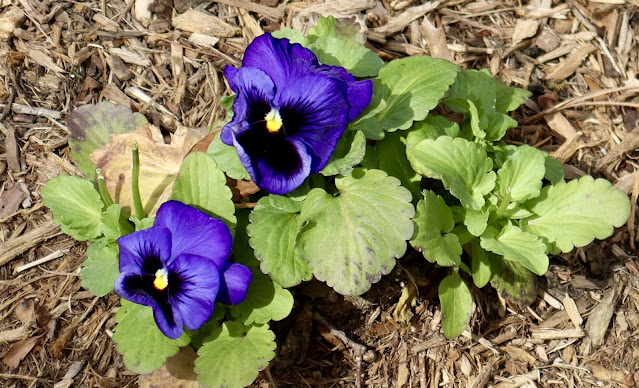
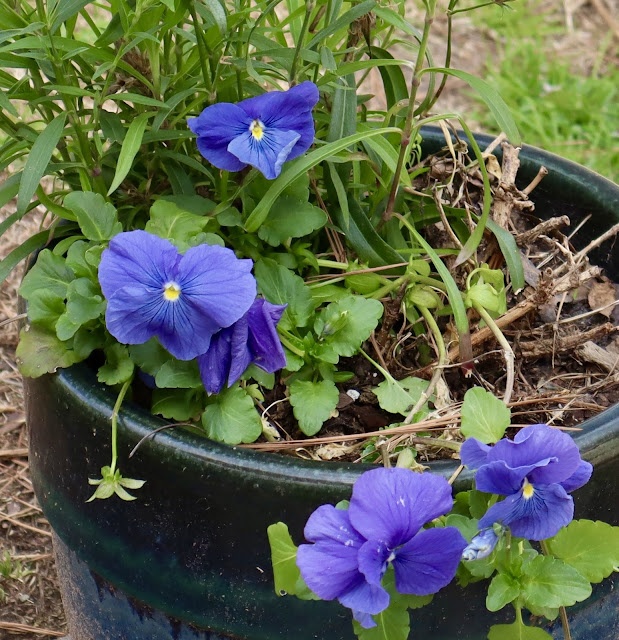
Bloom Day in February finds only a scarcity of blooms in my zone 9a southeast Texas garden.  We've had an exceptionally cold (for us) and an exceptionally extended (for us) winter and it has kept many of the plants that would normally be flowering at this time of year in their long seasonal sleep. There are a few pansies about, of course. 


~*~
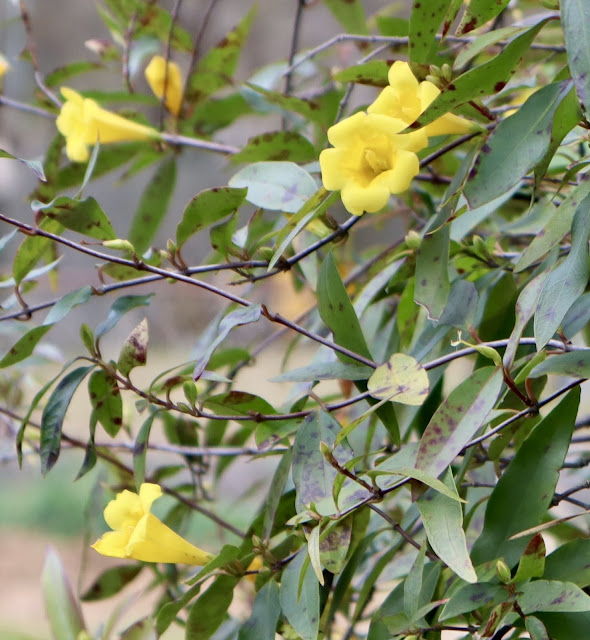
The Carolina jessamine is blooming but even it is not as full of blooms as it usually is. It has lots of buds and when we do finally get a few warmer days, I'm sure they will be opening.


~*~
There are some wild oxalis blooms among the grass of the lawn.


~*~

The white yarrow offers its blossoms.


~*~

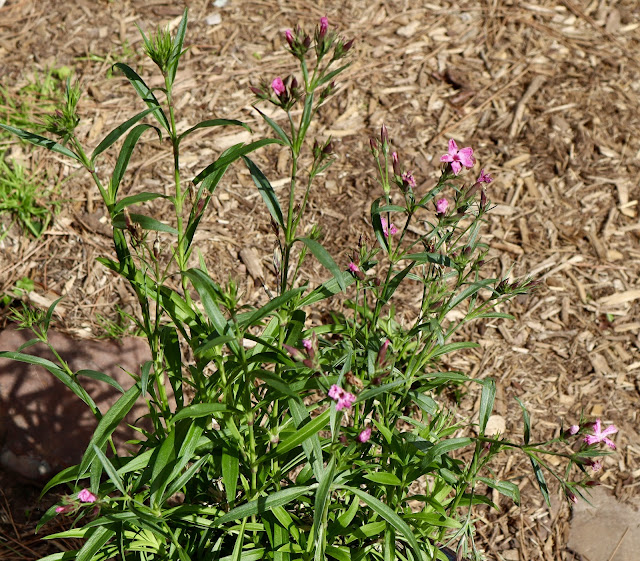
The pink dianthus has recently been in bloom and will be again soon. But just now, nada.


~*~

I do have some Valentine's Day blooms courtesy of my thoughtful son-in-law.


~*~
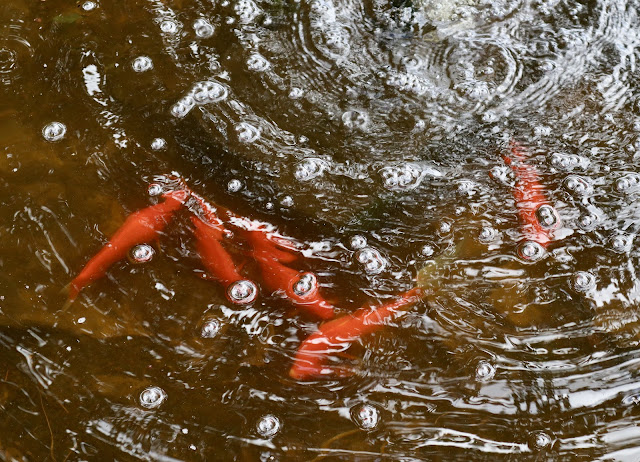
And the garden has a bit of color from my goldfish, lounging among the bubbles from the aeration by their pond's pump.


~*~

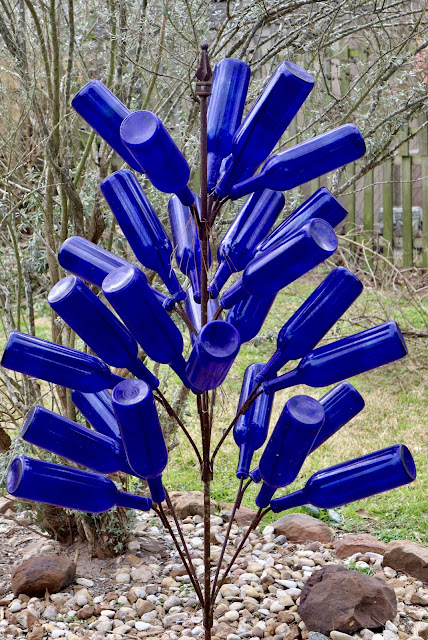
I can always depend on the "blooms" of my bottle tree!


But for now, the garden is still resting and mostly bloomless. Perhaps it will begin to wake up in March. In the meantime, happy gardening and happy Bloom Day.

Monday, February 14, 2022

Violeta by Isabel Allende: A review


The 100 years of Violeta Del Valle's life stretch from the Spanish flu pandemic to the current coronavirus pandemic. The country where she was born and lives is never named but one has to say that it sounds very much like Isabel Allende's native Chile. There are repressive forces at work here coming both from the state and from the day-to-day pressures of family life.

During her childhood, Violeta's mother is in poor health and unable to be much of a force in her life. She is mostly raised by an Irish governess who is warm and loving. Violeta is very fortunate to have her. We know about this because we are reading the 100-year-old Violeta's missives to her grandson which recall the events of a very tumultuous life.

We learn that in her early life, because of the pandemic, she was quarantined with her rich family in the capital city of her country. Then the Great Depression comes along and wipes out the family fortune. In despair, her father kills himself and Violeta is the one who discovers his body.

The family lives in virtual isolation in the country, but there Violeta meets a German veterinarian. She marries him but the veterinarian seems to have little time for her. He is obsessed with finding a way to preserve the semen of pure-bred bulls to be used in artificial insemination. He is something of an authoritarian and Violeta is expected to be submissive and sublimate her wishes and desires to his. This is not a role the high-spirited woman is suited for. She finds her marriage stifling.

She meets a dashing Air Force pilot who is a gun-runner for the Mafia and is also involved in some shady missions for the CIA. He sweeps the bored Violeta off her feet and she goes with him even though she remains legally married to the veterinarian. Their relationship soon turns abusive and he has affairs with other women but Violeta has a son and a daughter with him. The son grows into a sensitive young man who is not what his father wants in a son. The daughter eventually becomes a hopeless drug addict. 

Meanwhile, Violeta resents the double standards that brand her as an adulteress while allowing the pilot to skate free of responsibility. She goes on to experience success as a home builder, but most of the drama of all these events occurs offstage. All are revealed through her letters to the grandson and she simply states them as facts without dwelling on any of them. Well, one hundred years is a long time, after all, and there are a lot of events to get through.

Allende's narrative seems to hover above it all and view Violeta and her dramas from a distance. The reader never feels engaged in her life. Her son says to her at one point, "You live in a bubble, mom," and we never really get inside that bubble. Violeta does come to an epiphany of sorts that seems to recognize that she has been the beneficiary of a repressive regime that bled her country dry. As penance, she starts a foundation to support survivors of domestic violence. Somehow it all seems too little and too late.

My rating: 4 of 5 stars

Saturday, February 12, 2022

Poetry Sunday: February by Margaret Atwood

Poetry may not be what Margaret Atwood is most famous for, but she has in fact published eighteen books of poetry. And, judging by this example, she is quite an accomplished poet. This one made me smile in recognition at her description of the interaction with the cat. Also, her description of our increased appetite in winter seems, unfortunately, spot on. It's not an easy time for those of us who have to watch what we eat. We can only hope that spring will arrive in time to save us.

February


by Margaret Atwood

Winter. Time to eat fat
and watch hockey. In the pewter mornings, the cat,
a black fur sausage with yellow
Houdini eyes, jumps up on the bed and tries
to get onto my head. It’s his
way of telling whether or not I’m dead.
If I’m not, he wants to be scratched; if I am
He’ll think of something. He settles
on my chest, breathing his breath
of burped-up meat and musty sofas,
purring like a washboard. Some other tomcat,
not yet a capon, has been spraying our front door,
declaring war. It’s all about sex and territory,
which are what will finish us off
in the long run. Some cat owners around here
should snip a few testicles. If we wise
hominids were sensible, we’d do that too,
or eat our young, like sharks.
But it’s love that does us in. Over and over
again, He shoots, he scores! and famine
crouches in the bedsheets, ambushing the pulsing
eiderdown, and the windchill factor hits
thirty below, and pollution pours
out of our chimneys to keep us warm.
February, month of despair,
with a skewered heart in the centre.
I think dire thoughts, and lust for French fries
with a splash of vinegar.
Cat, enough of your greedy whining
and your small pink bumhole.
Off my face! You’re the life principle,
more or less, so get going
on a little optimism around here.
Get rid of death. Celebrate increase. Make it be spring.


Friday, February 11, 2022

This week in birds - #488

 A roundup of the week's news of birds and the environment:

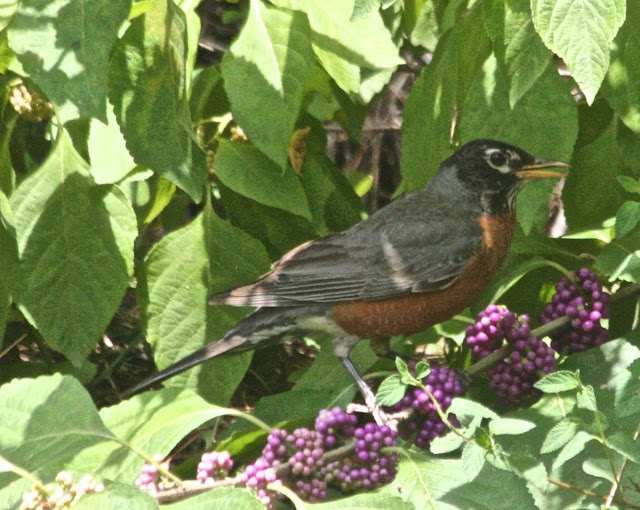
American Robins do love their beautyberries and there are plenty for them in my backyard.

*~*~*~*

Some rare good news for gray wolves this week: A federal judge has overturned the decision by the previous administration (which had also been defended by the Biden administration) to take the wolves off the Endangered Species List, thus removing them from the protection from being hunted. They will now be protected in most of the lower 48 states, although apparently, that protection will not extend to Montana and Idaho.

*~*~*~*

The National Butterfly Center in Mission, Texas remains closed due to threats from right-wingers. 

*~*~*~*

A saltwater crocodile in Indonesia that had somehow managed to get a motorbike tire wrapped around its neck has finally been freed after five years of carrying the tire. The reptile was trapped by a local bird seller and dozens of locals helped to drag the animal to where the tire could be cut from its neck. Then it was released back to the wild.

*~*~*~*

These two Bald Eagles nesting in Leesburg, Virginia now have names thanks to the children in the area. About 9,000 students in Loudoun County public schools entered a contest to give the birds names and what they came up with were Martin and Rosa for Martin Luther King, Jr. and Rosa Parks. The birds have a lot to live up to. There are two eggs in their nest which are expected to hatch in early March.  

*~*~*~*


The Wyoming toad was listed as endangered in 1984 and shortly thereafter was considered extinct in the wild. But reports of its demise were premature. Wyoming toad lives!

*~*~*~*

This seems like a sad burden to inflict on a poor, defenseless worm. Scientists have named a newly discovered flatworm after the coronavirus. Its official name is Humbertium covidum and it has been found in France and Italy but likely lives in other areas as well.

*~*~*~*

The construction of dams can endanger species of fish because they change the temperature of the water in rivers which may make it uninhabitable for the fish.

*~*~*~*

Wild Turkeys are big birds and groups of them can be very aggressive especially around nesting season. That seems to be what is happening in Mountain View, California now. They've become such a nuisance that plans are being made to trap and relocate them to a less populated area.

*~*~*~*

A loophole in protections has allowed more than 400 square miles of Amazon rainforest to be felled in order to expand soya-growing farms in the state of Mato Grosso in Brazil.

*~*~*~*

Here's a story about how the magic of birds can captivate onlookers.

*~*~*~*

Biologists are concerned that white-tailed deer could become a reservoir for coronavirus, posing an ongoing threat to both animals and humans.

*~*~*~*

The worst drought to hit the area in a decade is creating a humanitarian crisis in Somalia as millions are going hungry.

*~*~*~*

The Rough-legged Hawk is a strikingly handsome bird and it ranges over a good portion of North America.

*~*~*~*

Trust Canada to come up with a wonderful idea! The benefits to one's mental health of time spent Nature are well documented and now Canadian doctors can prescribe a pass for national parks for the patients whom they deem are in need of such time. 

*~*~*~*

Mountain glaciers are melting faster than ever because of climate change and in some areas, this is straining the freshwater supply.

*~*~*~*

Chimpanzees have been observed catching insects and applying them to wounds on themselves or other chimps. They do not eat insects but they are definitely applying them to wounds. Is this a form of chimp medicine? Scientists believe that may be just what it is. 

*~*~*~*

It's just possible that winter may be the very best time to observe Great Gray Owls like this one, as well as many other kinds of wildlife.

*~*~*~*

The experience of extreme weather can have devastating effects on animals even if they survive. Scientists are finding that rhesus monkeys who lived through a hurricane showed signs of premature aging.

*~*~*~*

A Texas-based group called Re:Wild has drawn up a list of the 25 most wanted species as part of its quest to find species that have been lost to science and that may be extinct. 

*~*~*~*

Betty, the National Zoo's oldest Flamingo has died at the age of 67. Betty had one chick of her own and fostered many others over the years. The average life span of Flamingos in captivity is 27 years, so she was indeed a remarkable bird.

*~*~*~*

Grotte Mandrin, a rock shelter in France, evidently sheltered both Neanderthals and Homo sapiens alternately over a period of some 50,000 years. 

*~*~*~*

Insects are disappearing from Nature and this is very bad news not only for insects but for all the rest of us. They are after all an integral link in the food chain. What happens if that chain is broken?

*~*~*~*

Rover, the Bald Eagle, was banded as a chick in New Haven, Connecticut on May 11, 2018. And now Rover has "roved" to New York's Central Park and has made himself quite at home there. If he can make it there, he can make it anywhere.

*~*~*~*

The birds of Hawaii are unique from those of the mainland. You can learn about some of them here.


Thursday, February 10, 2022

The Remains of the Day by Kazuo Ishiguro: A review


How is it I had never read this book? Just one of many oversights in my reading life, I guess. I'm glad to finally rectify my failure.

I had seen the movie based on the book long ago. It was made memorable by the performances of Anthony Hopkins and Emma Thompson in the two main roles and as I read the book, those were the faces that I saw in the characters of the butler James Stevens and the housekeeper Miss Kenton. 

Stevens and Kenton had both served in the pre-World War II household of Lord Darlington at Darlington Hall, a stately home near Oxford. We learn that Lord Darlington was a Nazi sympathizer, a fact which Stevens is slow to admit. After the war and after the death of Lord Darlington, Darlington Hall is bought by a wealthy American, Mr. Farraday. The house has a seriously reduced staff by this time. Miss Kenton is long gone, having married and moved to Cornwall. She is now Mrs. Benn. She and Stevens had remained in touch in the years after she left service and when Mr. Farraday is going to be absent from Darlington Hall for a while and urges Stevens to borrow his car and go for a road trip vacation he decides to visit Mrs. Benn. He has some hopes of persuading her to return as housekeeper since it seems that her marriage is now on the rocks. The book details Stevens' first-person narration of his road trip and his reminiscences of the events of the 1920s and 1930s.

What becomes clear early on in the narration is that Stevens is unshakeably loyal to Lord Darlington and never questioned his hosting of lavish meetings between German sympathizers and English aristocrats in the years leading up to World War II in an effort to influence international affairs. What is also clear is that the guiding principle in Stevens' life is his reverence for dignity. That and his understanding of what it means to be a "great butler" are the most important concepts for him. They are even more important than his unacknowledged love for Miss Kenton. For he was in love with her and perhaps she was in love with him, but it would have gone against the "dignity" of his position to act on it and so it was tucked away in the most hidden corner of his heart. Their relationship never strayed from that of a professional friendship, even though it seems, based on his reminiscences, that Miss Kenton might have tried to draw closer to him. 

As Stevens narrates his story for us, he seems to come to a realization, maybe for the first time, that Lord Darlington truly was a Nazi and was perhaps unworthy of his loyalty. He even seems to regret his lost opportunities with Miss Kenton. As he ponders "the remains of the day" and the remains of his life, he concludes that the evening is the best part of day and that it is best to enjoy the present of one's life rather than dwelling on the past.

This narrative was simply mesmerizing. The book received the Booker Prize for Fiction in 1989 and its author received the Nobel Prize for Literature in 2017, both richly deserved. In the announcement of his Nobel Prize, the committee stated that in Ishiguro's "novels of great emotional force, he has uncovered the abyss beneath our illusory sense of connection with the world." That seems the perfect description of The Remains of the Day and there is nothing more relevant that I could say about it.

My rating: 5 of 5 stars 


Monday, February 7, 2022

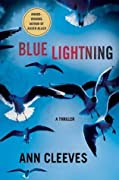
Blue Lightning by Ann Cleeves: A review


Continuing with my reading of Ann Cleeves' Shetland series, this is number four in that series. We get to know Jimmy Perez a lot better in this one. Mainly, we get to see where he came from and what his parents are like.

Jimmy grew up on Fair Isle and it is where his parents still live. It is to Fair Isle that he goes with Fran, his newly acquired fiancée, the former wife of Duncan Hunter and mother of young Cassie. He wants Fran to meet his parents, Big James and Mary. This book provides quite a bit of backstory for Jimmy and his parents.

Fair Isle is famous as a birders' paradise. It features a birding reserve and research center that is run by Maurice and Angela. They have managed to attract a marvelous chef named Jane who was eager to escape the hectic pace of London. She has been happy on Fair Isle.

Big James and Mary host an engagement party at North Light, the headquarters of the birding center, in order for their and Jimmy's friends to meet Fran. Jane prepares a sumptuous feast for them. It's a successful party and a good time is had by all. Then the murders start.

To make matters even worse, a storm cuts the island off and the islanders are trapped there with Jimmy Perez the only investigator to find the murderer. (Shades of Agatha Christie!) If Jimmy's trapped there then the murderer must be trapped there also, not a comfortable position for the islanders to be in.

It turns out that the first victim, discovered at the bird observatory, was not well-liked. In fact, she was pretty obnoxious and any number of people are probably perfectly happy to see her out of the way. A plethora of suspects does not make Perez's job any easier. Moreover, he only has the limited technology and communications of the island available to him while the storm rages. By the time things begin to calm down and he's able to get some of his team out to Fair Isle, another murder has occurred.

Cleeves, as always, is very cagy about developing her plot and revealing clues along the way and I confess I really did not figure this one out. The big reveal came as a bit of a surprise for me. But then, of course, it all made perfect sense.

In the last few chapters of the book, though, Cleeves delivers an absolute gut punch when she kills off one of the characters whom I had liked and sort of identified with. It's a gut punch for Jimmy Perez as well and further complicates the investigation.  

It seems that Ann Cleeves knows her birds well. She is a birder herself, I've read. Some of the best parts of the book for me were her passages about the birds of the island and about the birders who pursue them. All in all, this was a very satisfying read, even with the unexpected tragedy near the end. I look forward to reading the next entry in the series to see how this event plays out in Perez's life.

My rating: 4 of 5 stars 


Saturday, February 5, 2022

Poetry Sunday: Fear by Khalil Gibran

Khalil Gibran was a Lebanese-American writer and visual artist. He was deemed by others to be a philosopher, although he himself rejected the title. He was born in Lebanon in 1883 and died in New York in 1931, a relatively short life of 48 years. He accomplished a lot in the few years that he had including writing The Prophet, which is one of the best-selling books of all time, having been translated into over a hundred languages. He was a poet and his poetry shows his philosophical bent. This one is a good example of that.

Fear

by Khalil Gibran

It is said that before entering the sea
a river trembles with fear.

She looks back at the path she has traveled,
from the peaks of the mountains,
the long winding road crossing forests and villages.

And in front of her,
she sees an ocean so vast,
that to enter
there seems nothing more than to disappear forever.

But there is no other way.
The river can not go back.

Nobody can go back.
To go back is impossible in existence.

The river needs to take the risk
of entering the ocean
because only then will fear disappear,
because that’s where the river will know
it’s not about disappearing into the ocean,
but of becoming the ocean.

Friday, February 4, 2022

This week in birds - #487

 A roundup of the week's news of birds and the environment:

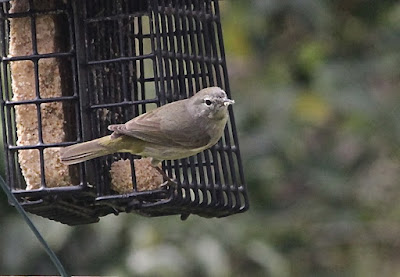
An Orange-crowned Warbler enjoying a meal of suet.

*~*~*~*

The National Butterfly Center on the Texas/Mexico border in Mission, Texas, has announced that it will be closed to the public for the foreseeable future as a result of harassment from right-wingers. The center, which is privately owned, has been the focus of conservative conspiracy theories and political conflict in recent years as they fought against the former president's plan to build a wall through their land.

*~*~*~*

The Biden administration is reinstating the mercury pollution rules that were gutted by the previous administration. Mercury is released by coal-burning power plants and it is a powerful neurotoxin that has been linked to developmental damage in children.

*~*~*~*

New research has confirmed that extreme heat in the world's oceans passed the point of no return in 2014 and is now the new normal. It is a "normal" in which many species of life endemic to oceans cannot survive. 

*~*~*~*

Remember the Mexican wolf nicknamed Mr. Goodbar who spent days trying to find a way through the wall which our previous president built along a section of our border? Well, some fool has shot him. He was shot in his right hind leg and although he will survive, all or part of the leg will have to be amputated. Investigators are seeking the guilty shooter.

*~*~*~*

February 2 was, of course, Groundhog Day, the day when these secretive animals briefly emerge from the shadows. Little is known about groundhogs' social life and researchers are aiming to change that

*~*~*~*

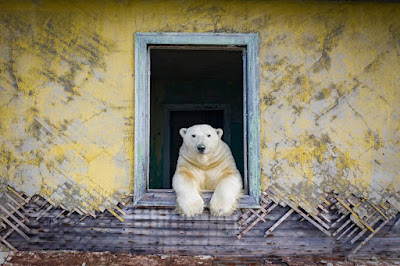
An island in the Russian Arctic used to be home to a meteorological station but has since been abandoned. Abandoned by humans that is. The polar bears have moved in and now make use of the human structures left behind.

A polar bear looks out a window of one of the buildings on Kolyuchin Island in the Chukchi Sea.

*~*~*~*

2021 saw the emergence of the periodical cicadas, the insects that spend most of their lives underground, emerging into the light after 17 years. Scientists are now studying what was learned from them and looking toward the next emergence in 2038

*~*~*~*

Judges who hear suits regarding offshore oil drilling leases are increasingly requiring that the government take the effects of climate change into consideration before approving those leases.

*~*~*~*

Crows are exceptionally clever birds and a city in Sweden is taking advantage of that. They have trained the crows to pick up cigarette butts on streets and squares. They work for peanuts and are much more efficient than human trash collectors.

*~*~*~*

Jonathan the tortoise has been designated as the oldest land animal in the world. He is estimated to be 190 years old, although he may actually be older. 

*~*~*~*

Montana wildlife officials have responded to widespread criticism regarding their wolf hunts by shutting down the hunting in a portion of the state around Yellowstone National Park. Twenty-three of the Yellowstone wolves had been killed.

*~*~*~*

A global tree count by thousands of researchers who used World War II codebreaking techniques developed at Bletchley Park has estimated that there are 73,300 species of trees on Earth. The estimate included 9,000 species yet to be discovered.   

*~*~*~*

San Franciscans are very tolerant of wildlife and live amicably side by side with everything from snakes and coyotes to mountain lions. But many are drawing the line at feral hogs which have overrun some neighborhoods and are very destructive. They want them gone, the sooner the better. 

*~*~*~*

Hours of heavy rainfall in Ecuador earlier this week have caused floods and landslides that have killed at least 24 in Quito and injured many others. 

*~*~*~*

The Texas Commission on Environmental Quality is poorly named; it seems not very concerned about environmental quality. They admit that they have repeated gaps in their monitoring of industrial pollution in the first days following a natural disaster.

*~*~*~*

Volcanism that occurred on Earth some 200 million years ago ripped apart the supercontinent of Pangea and contributed to the extinction of about a quarter of life on the planet during the event known as the end-Triassic mass extinction.

*~*~*~*

Peacocks are quite magnificent birds but when you've got packs of them running around your city they can be a problem, as Miami has discovered. They are big birds and can be quite destructive, plus they poop a lot and are not concerned about where they do it.

*~*~*~*

Do you have a bird feeder in your backyard? Then you might consider being a part of Project FeederWatch and counting your feathered visitors for science.

*~*~*~*

Iceland is one of only three countries that continue to hunt whales commercially, but they are ending that practice in 2024, leaving only Norway and Japan as commercial whaling countries.

*~*~*~*

Methane-detecting satellites are giving researchers a better idea of where methane emissions are coming from around the world. The information may help to find ways to crack down on the release of massive amounts of this climate pollutant.

*~*~*~*

Climate change has had a tremendous impact on the state of Washington over the past year, causing many deaths and substantial damage. The government of the state is considering what changes in laws may be appropriate to help people cope.

*~*~*~*

Earth's sixth mass extinction is underway and scientists have estimated that hundreds of land animals could go extinct in the next 20 years.

*~*~*~*

A same-sex couple of two Humboldt Penguins at the Rosamund Gifford Zoo in Syracuse, New York adopted an egg during the breeding season and are now foster parents to a newly hatched fuzzy-haired chick. Zoo officials say the two are doing a great job of caring for the baby. 

*~*~*~*

Finally, a mischievous New Zealand parrot called a Kea stole a GoPro camera from a couple and in the process filmed its flight over remote Fiordland.


Thursday, February 3, 2022

Joan is Okay by Weike Wang: A review


Joan is most definitely okay if a little weird. She is a Chinese-American doctor working in an ICU in New York City. She lives alone in a sparsely furnished apartment. She does not own a television and barely even owns a chair, but she seems perfectly happy with her existence. She doesn't relate well with humans but she loves machines, especially the machines in the ICU. Her parents who had originally emigrated from China to the U.S. returned to China once both of their children, Joan and her older brother Fang, were grown and in college. They saw their jobs as parents as done.

Fang became an extremely successful hedge fund manager, meeting all his parents' expectations. He married and had a couple of children and he and his family now live on a rather palatial ten-acre compound in Greenwich, Connecticut. He pressures Joan to leave the hospital ICU, move to Greenwich and open a private practice there. When their father dies in China, he and Joan travel there. Joan stays for two days. Fang stays for two weeks. Later their mother comes back to America and stays with Fang and his family. She and Fang increase the pressure on Joan.

Joan has no real friends but when Mark moves in across the hall from her, he inserts himself into her life. When he sees her apartment and realizes it is essentially unfurnished, he starts giving her things to make the place a bit homier. Or what he sees as homier. Joan is oblivious. She's perfectly happy with what she has. Her interactions with Mark are the most normal social interactions she has and one somehow expects their relationship to develop into something deeper, but of course, it is not to be.

If you are beginning to suspect that Joan is just a bit strange, you are not wrong. She is smart but extremely introverted and with limited social skills. Her first impression of the people she meets is always defined by their height and weight. She shows classic signs of Asperger's syndrome, characterized by repetitive patterns of behavior, restricted interests, and difficulties with social interactions. She is in her mid-thirties and is being pressured by her family to get married and have kids. Her sister-in-law expresses the opinion that she will not be a real woman until that happens.

Joan narrates her story and it reads almost like an autobiography. As we approach the end, the coronavirus pandemic is getting underway and it affects Joan personally. The ending felt a bit abrupt, probably because I had become invested in Joan and I wanted to see her story continue to a "happily ever after." She is a memorable and very real character. I still find myself wondering how she is coping. If Weike Wang ever decided to write another book featuring her, I would certainly read it.

My rating: 4 of 5 stars