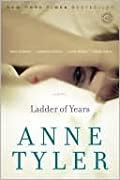
When we meet Delia, she is forty years old and has been long married to Sam Grinstead. They have three children, the youngest of whom is fifteen. Sam is a doctor who still makes house calls, like Delia's father before him. The house they live in is the house that Delia grew up in and where Sam came to be her father's assistant when she was only seventeen.
Delia has two sisters, Eliza who has never married and Linda who is now divorced and has two young daughters. They all vacation together at the beach every year. It is a family tradition, but at age forty as she sits on the beach during their annual trip, Delia is feeling more and more distant from that family. Everything that her husband does seems to annoy her and after a disagreement with him, she walks along the beach and just keeps walking. She has left everyone behind without a word.
Delia hitches a ride with a truck driver to a new town, Bay Borough. There she found a room in a boarding house and got a job and set out to make a new life for herself. It's never really clear why she did this, other than, as she says at one point, she just liked the idea of starting again from scratch. But abandoning your family without a word and deciding to go it alone does seem a rather momentous response to a random feeling of ennui.
On the other hand, her family seemed a bit desultory in their attempts to find her. Apparently, they went on with their lives as before. Eventually, they do find her more than a year later but decide to leave her alone and not insist on her return. In the meantime, she has made that new life for herself, working as a housekeeper for a divorced man and his son. They have come to depend on her and think of her as an essential part of their family.
When her daughter decides to get married, Delia is invited to the wedding and she goes. Will she stay? Will she abandon her "new family" to return to her old one? And what about the cat? Oh, yes. I forgot to mention an important character. Delia had adopted a stray cat as part of her new life.
This is a book about choices and how we make them. And the overall message seems to be that often we don't "make" them. We just slide into them without really thinking them through. We act on the spur of the moment and then find it hard to retrace our steps.
Anne Tyler always writes with such grace. In reading her words, we feel "Of course. How could it have been otherwise?" Her stories unfold with a certain passivity and inevitability. In this particular instance, I did not find much to like about any of her characters. The most likable of the lot were the father and son for whom Delia worked as housekeeper. I would have liked to spend more time with them.
My rating: 3 of 5 stars
I like Anne Tyler because I know what I am going to get…a picture of human beings in all their awful and glorious manifestations.
ReplyDeleteThat's an excellent description of her writing. She writes about real people and real people are hardly ever perfect.
DeleteHow can she have Delia go back to that awful man?
DeleteAwww, yes. I liked this an awful lot more than you but, perhaps I because what Delia did was something I thought about but, never did when I was young. I did like the Dad and son she worked for and I liked Delia as well although many would disagree how someone could a parent who abandons their children.
ReplyDeleteI do remember that you liked the book. I didn't dislike although I felt a bit ambivalent. I just found most of the characters offputting.
DeleteI find a lot of Anne Tyler's characters just seem to slide into things in life without consciously choosing it. Passivity and inevitability describe her stories well.
ReplyDeleteIt does seem to be a common thread in her novels and I suppose it is true to life. How many of us have just slid into situations in our lives without consciously choosing them?
DeleteSo I guess the unlikable characters detracted from your liking the book. I find that with me as well ... if I can't latch on to something likable about it, I have trouble with the overall feeling about the book. Still other Tyler books are better.
ReplyDeleteI've mostly liked her books so was just a bit disappointed with this one.
DeleteAnne Tyler is a remarkable storyteller. At first glance, I always find her characters to be a little too quirky to be totally believable, but by the end of her novels I've always completely bought in to the whole package. Love her books.
ReplyDeleteQuirky is a good way to describe them. They are always memorable.
Delete