Thanks for Following

Tuesday, March 29, 2022

Black Cake by Charmaine Wilkerson: A review


Eleanor Bennett is dead. That is the first incontrovertible fact with which we are presented. Her two children, Byron and Benny, are estranged from each other, and Benny was also estranged from her mother, although her mother continued to reach out to her. Eight years earlier, Benny had announced to her family that she was a lesbian. That had precipitated the break and they had not spoken to each other since. But now, Benny has returned home because Eleanor Bennett is dead and she is required to be at the settling of her estate.

Before she died, Eleanor did two things: She recorded an eight-hour-long audio tape for her children to explain herself and tell them the story of her life and she made a black cake, a family recipe for a fruit cake, and froze it. The tape tells a complicated story that they had not been privy to previously. They must listen to it in the presence of Eleanor's lawyer. Their mother left instructions for them to eat the black cake together at a time that they will both recognize is right.

We learn that Byron has a successful career, but his sister has been unable to settle on a direction for her life. She dropped out of college years ago and has wandered rather aimlessly through life since then. We also learn that their mother was originally from an unnamed island in the Caribbean. There, she was a young girl named Covey. She and her father had been abandoned by her mother. After her mother left, she never contacted them again.

Covey's father was a gambler who also drank to excess, thus making her life less than secure. Her greatest joy was swimming in the ocean with her best friend Bunny and her boyfriend Gibbs. She and Gibbs made big plans for the future. They would go to London after they graduated high school and attend college there. They do get to London and eventually to the United States, to California, and it is there that they spend the rest of their lives.

Interspersed with Covey/Eleanor telling the story of her life on the audio tape, we also get snippets of the story of Benny and Byron. While I found Eleanor's story to be sympathetic and her character to be likable, I can't really say the same for Byron and Bunny. They had once been close as children but after Benny's big reveal, Byron evidently abandoned the relationship and they had no further contact until after their mother's death. Each of them was self-absorbed and unable, or unwilling, to really care much about other people, including each other.

The audio tape provides a number of surprises for Eleanor's children, but the biggest surprise is that they have a half-sister. As a young woman on her first job, Eleanor had been raped by her boss and had had a child as a result. Her daughter had been given up for adoption. That daughter is now a successful television personality in London.

This was the debut novel of Charmaine Wilkerson and one has the feeling that she attempted to cover all the major social issues in one plot. She attempts to address not only workplace rape but things like racial and gay discrimination, police brutality against Blacks, the pollution of the ocean, arranged marriage, forced adoption, parental abandonment, and on and on. It's too much! If she had stuck to just one or two of those, it would have been a much stronger and more coherent plot. The main characters are well-drawn, particularly Elizabeth and her husband, but the story told is disjointed with events sometimes occurring out of order. A tighter focus would have made for a much more enjoyable read.

On the plus side are the emphases on the importance of foods and traditions to island life and the references to the history of the island which could be a stand-in for most of the Caribbean islands. It is a rich and complicated history that provides the outlines for a potentially great tale. That isn't this book, but still, this one isn't bad. 

My rating: 3 of 5 stars

Saturday, March 26, 2022

Poetry Sunday: The Road Not Taken by Robert Frost

I know I have featured this poem here before, but it has been several years ago, so maybe I can be forgiven for putting it out there once again. It is one of Robert Frost's most famous poems. It is a poem that anyone who has ever had to choose between courses of action in life - in other words, everyone - can easily relate to. What to do when faced with two choices each of which seems "just as fair" as the other? How does one choose? And will we at some point in the future recall those "two roads" and wonder if we traveled the right one?

The Road Not Taken

by Robert Frost

Two roads diverged in a yellow wood,
And sorry I could not travel both
And be one traveler, long I stood
And looked down one as far as I could
To where it bent in the undergrowth;

Then took the other, as just as fair,
And having perhaps the better claim,
Because it was grassy and wanted wear;
Though as for that the passing there
Had worn them really about the same,

And both that morning equally lay
In leaves no step had trodden black.
Oh, I kept the first for another day!
Yet knowing how way leads on to way,
I doubted if I should ever come back.

I shall be telling this with a sigh
Somewhere ages and ages hence:
Two roads diverged in a wood, and I—
I took the one less traveled by,
And that has made all the difference.

Friday, March 25, 2022

This week in birds - #494

 A roundup of the week's news of birds and the environment:

Brown Pelican resting after a swim in Galveston Bay.

*~*~*~*

At least seven wildfires were raging around the defunct Chernobyl nuclear site this week, raising fears of possible radiation leakage. The fires were blamed on the Russian forces that now hold the site.

*~*~*~*

There are heatwaves happening at both the planet's poles. Climate scientists are alarmed that these unprecedented events could signal a faster and more abrupt climate breakdown.

*~*~*~*

While the world's attention is focused on the war between Russia and Ukraine, Brazil's president Bolsonaro is taking advantage of the crisis to try to pass legislation to allow large-scale mining on pristine land that is under the control of Indigenous people.

*~*~*~*

This could be a good thing: Climate change is spurring a movement to build houses that can withstand storms. Building houses that can survive natural disasters sort of seems like a no-brainer, doesn't it?

*~*~*~*

Climate change is a threat to food stocks in sub-Saharan Africa but researchers say that a comprehensive approach to food, farming, and resources could increase crop production by more than 500% in some countries in the region.

*~*~*~*

Unusually high temperatures in Antarctica have caused the entire Conger ice shelf, an area as big as Rome, to collapse.  Record high temperatures were the result of an atmospheric river that trapped heat over the continent. On the opposite end of the Earth, the high temperature could cause the sea ice in the Arctic Sea to reach its maximum point much earlier than normal.

*~*~*~*

Have you ever wondered why our right halves, and the right halves of virtually every living thing on the planet, mirror the left halves? Obviously, Nature has a clear preference for symmetry.

*~*~*~*

Cannibalism has a very long history on Earth, going back all the way to the trilobites of the Cambrian era of 514 million years ago.

*~*~*~*

Scientists are predicting that wildfires will pose a greater socioeconomic risk in years to come as they burn agricultural areas and cause harm to the populations there.

*~*~*~*

Wildlife corridors and safe highway crossings are critical to the survival of wildlife in many areas. That is nowhere more true than for the elusive Florida panthers.

*~*~*~*

The world's forests do more than just store carbon; they also help to keep our planet cooler, thus ameliorating the effects of climate change which is a very good reason to protect them.

*~*~*~*

The fungal disease white-nose syndrome has been around for a while, long enough to have devastated the nation's population of long-eared bats. The U.S. Fish and Wildlife Service has moved to reclassify the species as endangered after a review found that it had caused declines of 97% to 100% in affected populations. 

*~*~*~*

Trees live amid an orchestra of organisms and they could be a model for us for a new way of being, a more eco-friendly way of being.

*~*~*~*

It seems that many young people are not quite ready to throw up their hands in despair over the state of the environment. They believe that it is possible to fight "climate doomism" by focusing on the positive steps we can take. And this should offer us some hope for our future.

*~*~*~*

Do alligators play? There seems to be some evidence that they do.

*~*~*~*

An international conservation group has reclassified Japan's Red-Crowned Cranes from endangered to vulnerable. The population of the bird has swelled since they have been protected. The question now is whether they could continue to thrive absent human intervention.

*~*~*~*

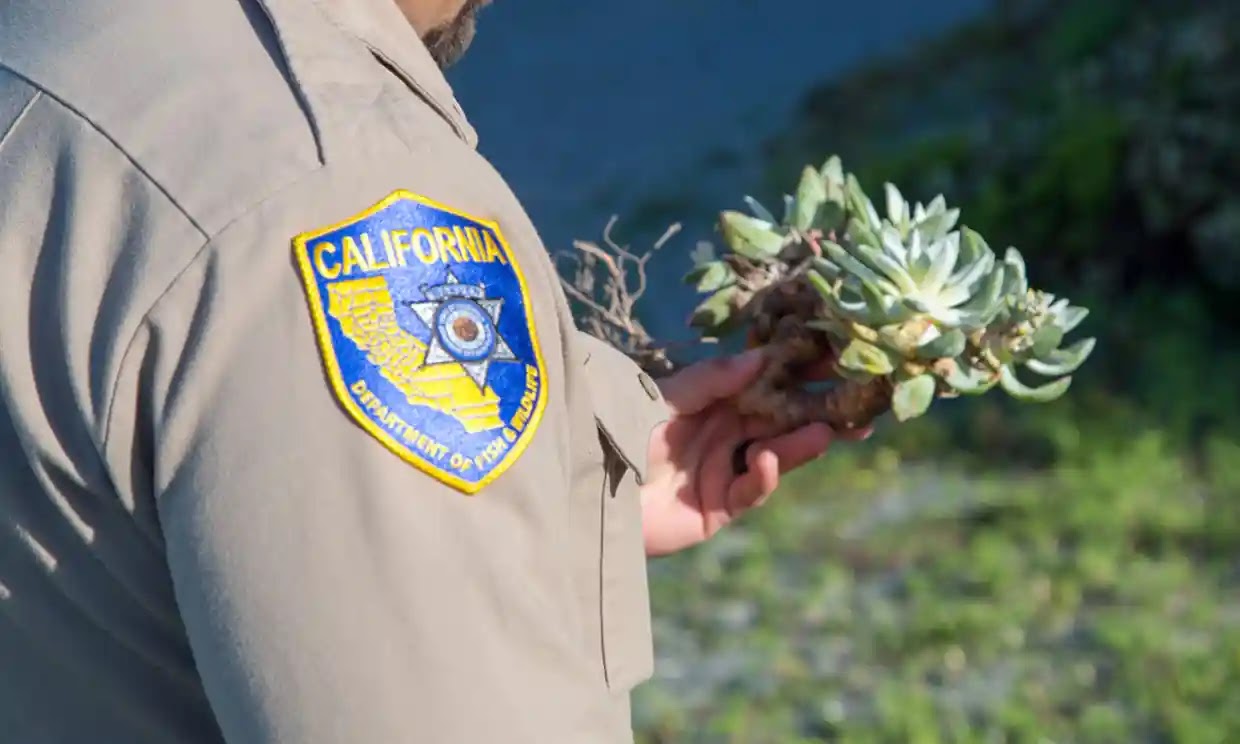
He may be the world's most notorious succulent thief, having just pleaded guilty to trying to ferry 3,700 of these wild dudleya plants from California parks to South Korea. South Korean national Byungsu Kim appeared for his sentencing hearing this week. He has already been in jail on two different continents for two years.

*~*~*~*  

After spending their entire lives in captivity much of it in an old train car, four Bengal tigers have now been released into a wildlife reserve in South Africa. It is the first time they have felt grass. 

*~*~*~*

Illegal deforestation is undoing the lungs of the Earth. The Amazon is being devastated by illegal roads being built through it. But first, the trees are cut.

*~*~*~*

One of the Great Barrier Reef's healthiest reefs has succumbed to bleaching. There has been widespread bleaching during the La Niña weather pattern which is causing concern that it could be even worse during the warmer El Niño cycle.

*~*~*~*

How are boa constrictors able to breathe when they are coiled around their prey and squeezing the life out of it?

*~*~*~*

Many bird species are nesting and laying their eggs as much as a month earlier than they did in the past. 

*~*~*~*

This sweet little bird is, of course, the White-throated Sparrow, a winter visitor to our area. They have mostly headed north by now. They are the American Bird Conservancy's Bird of the Week.  

*~*~*~*

The cherry trees of D.C.'s Tidal Basin are beautiful at all seasons, but never more than in spring. 


Thursday, March 24, 2022

Four Thousand Days by M.J. Trow: A review


Historical mystery fiction featuring a female archaeologist around 1900 was a premise that intrigued me. Shades of Amelia Peabody from all those mysteries by Elizabeth Peters. In fact, Amelia and Margaret Murray would probably have been good friends. Both had a keen interest in solving modern-day mysteries as well as ancient ones. And if a murder were involved, so much the better.

Four Thousand Days introduces us to archaeologist Margaret Murray in the first book of what is planned to be a series. She is a lecturer at University College, London, and when the naked dead body of one of her students is discovered spreadeagled on the bed in her rented room soon after attending one of Dr. Murray's lectures, the teacher takes it personally. The police are convinced that it was suicide. Dr. Murray isn't so sure of that.

Although Murray's expertise is in investigating long-dead bodies, she is not averse to scrutinizing the circumstances of the death of this newly dead corpse. In probing the life and death of Helen Richardson, she soon learns that the woman had been privy to a number of secrets. Among them was information about a remarkable archaeological find. 

In trying to get to the bottom of the facts about the woman's death, Murray has a partner in a young police constable named Adam Crawford, who is also one of her students. He, too, is convinced that Helen's death was not suicide, contrary to the official finding. They are ably assisted by a retired detective inspector, Edmund Reid, who is intrigued by the puzzle of the woman's death. When the body of a second woman is found on a windswept Kent beach and this one clearly murdered, it becomes even more urgent to discover what is behind the deaths and if others are in danger.

The character of Margaret Murray is loosely based on a real person who was a pioneer in the "man's world" of academia in the early 1900s. In the world of fictional characters, she has antecedents not only in Amelia Peabody but also in Miss Marples, to name only two.  She is intelligent and curious and not at all daunted by being the lone woman in a man's world. She is a compelling character and I'll be interested to see where her creator takes her in future books.

This first entry in the series was a bit uneven and the conclusion was perhaps too convenient, but overall, it was a diverting read. There is certainly much there to build on in the future and one would hope that the characters Adam Crawford and Edmund Reid will continue to be a part of that future.

My rating: 3 of 5 stars 

Tuesday, March 22, 2022

Grimm Up North by David J. Gatward: A review


I've been auditioning a few new-to-me mystery series for my reading pleasure and here comes another one. This one is by David J. Gatward, another writer that I had never read, never even heard of as far as I can remember. It features DCI Harry Grimm as its main character and is set in Yorkshire. This is the first book in the series. Gatward writes with a light hand and there is quite a bit of humor in the tale he tells here.

Harry has been a pain in the ass for his boss on the Bristol Major Investigations Team and when he has the opportunity to get Harry out of his hair he takes it, sending him north to a town called Hawes in Wensleydale on secondment. It's a place that is famous for its cheese and its scenery. It's the kind of Yorkshire setting that is so popular with writers of British crime fiction, so this all feels very familiar. 

Harry is a city boy and he doesn't know what to make of his new assignment in a more rural location. He expects that his duties will entail searching for lost sheep, directing tourists, and handing out speeding tickets. But soon after he arrives a local teenager runs away from home and the search for her reveals that things may not be as lazy and idyllic up north as Harry has assumed. Moreover, the missing person quickly escalates into something even more sinister and just like that Harry has his hands full.

Harry is an interesting character. For one thing, his face is quite scarred as the result of his encounter with an IED while in the military service. Maybe it is that experience that has helped to make him the grumpy sort that he is. His defense against the world is sarcasm which he wields quite readily. He is also very smart and very good at his job. His character is one of the strengths of the book.

Another thing that I liked about the book was the author's description of the Yorkshire Dales, a beautiful place. I kept seeing images of scenery from the television series "All Creatures Great and Small" and that was not an unpleasant thing.

The book also held some annoyances for me. For example, unnecessary repetition. How often did the author tell us that Harry was in the "Paras" during his military service? I didn't count but it seemed to be on almost every page. I think I could have gotten the idea after just a couple of mentions. The plot was pretty straightforward and didn't hold any real surprises. I guess I've been spoiled by all my reading of Ann Cleeves' mysteries. I'm always expecting red herrings and plot twists. But that was not this book.

Overall, this was a pleasant read. There was not much that was especially memorable about it except for the character of Harry and the Yorkshire setting, but that was enough to hold my interest and I would expect to read more of the series in the future.

My rating: 3 of 5 stars


Monday, March 21, 2022

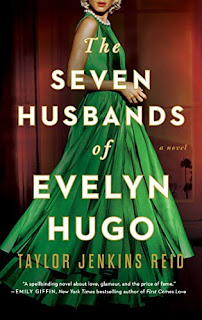
The Seven Husbands of Evelyn Hugo by Taylor Jenkins Reid: A review


In Daisy Jones and the Six, Taylor Jenkins Reid wrote of a number of very strong women in the rock music field. In The Seven Husbands of Evelyn Hugo, she writes the story of one very strong woman who refused to let society dictate the kind of life she should lead. 

Evelyn Hugo became an actress and she was determined to chart her own course in life. She married her first husband to escape the life that she had and then dumped him when she needed to in the furtherance of her career. And that was essentially the pattern that was repeated throughout her seven marriages.

We meet Evelyn when she is at the end of her life. She is 79 and has decided that it is time that her biography is written. To write it, she calls on a fairly unknown journalist named Monica Grant who works for a magazine in Los Angeles called "Vivant." Both Monica and her editor are surprised by the request, but Evelyn has her reasons. Reasons that will only be revealed near the end of this story.

Evelyn Hugo was born Evelyn Elena Herrera, the daughter of Cuban immigrants. She grew up in poverty in New York's Hell's Kitchen but she had one asset: her incredible beauty. That's not quite true. Although her beauty was the main asset, she also had a radiant energy that drew people to her. She was competitive and determined and she saw the road out of her poverty as leading through Hollywood. And so she headed there. She dyed her hair, learned to expose her body on camera while looking at that camera with her beautiful almond-shaped eyes under long lashes and soon she was launched and directors and the camera wanted more. So did all the seven men she married. They all got their money's worth but Evelyn always kept something back, something for herself.

Evelyn's grand passion was not for any of the men she married nor for the career that she fashioned for herself; it was for a woman. But this was Hollywood in the '60s and two women loving each other was not a story that it was willing to tell. Evelyn's life story as she tells it to Monica was not simply one of this forbidden love, however. It is also the story of her own ruthless ambition to be a star and of an enduring friendship that sustained her through all the trials of her life. 

Reid expertly captures the atmosphere of Hollywood in the '50s and '60s or at least Hollywood as I imagine it was in the '50s and '60s, a world that thrived on fantasy and giving the audience the story that they wanted regardless of the truth. Thus, the audience was perfectly capable of accepting a woman who serially married seven different men, but would not have been able to accept a woman who through all of those marriages was in love with one woman. The Evelyn that Reid describes used her asset - her beauty and her body - to get what she wanted. She worked in an industry rife with blatant sexism but she was able in some ways to use that. She took the world as she found it and manipulated it to her advantage. It is an engrossing tale on many levels and as Reid tells it, it is a real page-turner.

My rating: 4 of 5 stars

Saturday, March 19, 2022

Poetry Sunday: A Light exists in Spring by Emily Dickinson

"The Belle of Amherst" she has been called. Though she was not well known during her lifetime, in death Emily Dickinson has emerged as one of the most important poets that this country has produced. One of the memorable things about her poems is the eccentric capitalization of random words. Why did she do it? Who knows? She marched to a drummer no one else could hear.

In 1890, Dickinson published this poem about the unique light that occurs in spring. It is a passing thing as are most things in life and it must be experienced in the moment. It is a mystical light that "almost speaks" in a language known only to the soul.  

A Light exists in Spring

by Emily Dickinson

A Light exists in Spring
Not present on the Year
At any other period —
When March is scarcely here

A Color stands abroad
On Solitary Fields
That Science cannot overtake
But Human Nature feels.

It waits upon the Lawn,
It shows the furthest Tree
Upon the furthest Slope you know
It almost speaks to you.

Then as Horizons step
Or Noons report away
Without the Formula of sound
It passes and we stay —

A quality of loss
Affecting our Content
As Trade had suddenly encroached
Upon a Sacrament.


Friday, March 18, 2022

This week in birds - #493

 A roundup of the week's news of birds and the environment:

The Whooping Cranes wintering on the Gulf Coast will soon be flying north to Canada once again.

*~*~*~*

In Brazil, thousands are protesting against what environmentalists are calling a historic assault on the environment by the government of President Jair Bolsonaro, specifically five environment-related bills that are being considered by the congress. Meanwhile, the Brazilian rainforest, sometimes referred to as the "lungs of the planet", is being slowly destroyed by deforestation which has dire consequences for Earth.

*~*~*~*

Globally, there is a tree-planting boom as businesses and consumers, non-profit groups and governments attempt to address climate change by planting billions of trees around the world.

*~*~*~*


This is an Australian Magpie and it is a very clever bird. Scientists who fitted the birds with tracking devices found out just how clever. The birds set about helping each other by removing the devices from their fellow magpies.

*~*~*~*

There was exciting news this week about the discovery 10,000 feet deep of the shipwreck of Ernest Henry Shackleton's ship Endurance. Even more exciting than the discovery itself as far as biologists were concerned was learning about all the creatures that have colonized the shipwreck since it went down in 1915. The creatures included a white crab that had never before been seen in the Weddell Sea.

*~*~*~*

Hundreds of thousands of people in Kenya are being displaced because of the flooding of the country's great lakes. The world does not seem to be paying any attention to the disaster and its human suffering.

*~*~*~*

As coastlines become eroded, old landfills are being exposed and their toxic waste is being washed into the sea. 

*~*~*~*

Monitoring flights along the Queensland coastline have revealed that the Great Barrier Reef of Australia is undergoing its sixth mass bleaching event.

*~*~*~*

Octopuses are known to be extremely clever. They are showing just how clever by adapting human trash that winds up in their ocean to be used as shelters.

*~*~*~*

If you are looking for some reading that could help you to do something positive to address climate change, The Revelator has a list of seven new books that you might find interesting.

*~*~*~*

The kind of military conflict that we are seeing in Ukraine does not just destroy human lives, it can also destroy the environment with disastrous results for the plants and animals that make their lives there.

*~*~*~*

The planet is a noisy place but it isn't just humans that are making those sounds. Animal voices are everywhere and each is a marvel of evolution.

*~*~*~*

Pesticides being sprayed on National Wildlife Refuges? Really? Doesn't that seem entirely antithetical to the purpose of a wildlife refuge? 

*~*~*~*

This American Kestrel is just one of the many birds of Puget Sound. Turns out it is a very birdy place.

*~*~*~*

Another invasive species is making its way up the East Coast of North America. It is a palm-sized arachnid from Asia called a Joro spider.

*~*~*~*

A gardener explains how she came to love the "weeds" in her garden and why you should, too.

*~*~*~*

This is Doug. For a while, he was thought to be the world's biggest potato, but then DNA testing proved he wasn't a potato at all.

*~*~*~*

It began more than a century ago as an effort by the Wyoming Game and Fish Department to save a dwindling herd of elk. Now the wild elk have become dependent on that effort and they are fed every day throughout the winter on 22 state feeding grounds.

*~*~*~*

A project using oyster shells as building blocks for new, living coastal reefs along the coastline of Staten Island may also have the effect of helping to protect the city from the storms of climate change.

*~*~*~*

How can the country end its dependency on fossil fuels and help to save the planet from climate change? This is one of the puzzles facing President Biden.

*~*~*~*

Biodiversity helps make the living things on Earth flourish but it is at risk in many places around the planet.

*~*~*~*

Webcams are an important tool in scientists' efforts to save the Cahow, or Bermuda Petrel, one of the world's rarest seabirds.

*~*~*~*

A "bomb cyclone" is bringing exceptionally mild air to the Arctic. Temperatures of around 50 degrees higher than normal have occurred, meaning that they have climbed near the freezing mark.

*~*~*~*

This is the White-throated Sparrow which is a bit of an anomaly among sparrows in that its white throat makes it easy to identify. It is also one of the more common birds at feeders in the East in winter. Here are ten fun facts about this wonderful little bird.


Wednesday, March 16, 2022

The Paris Apartment by Lucy Foley: A review


The apartment in the title is the home of Ben Daniels, a British journalist. Ben receives a text from his half-sister Jess Hadley asking if she can stay with him for a while. Jess, who lives in Brighton, has recently lost her job and is now homeless and virtually penniless. She and Ben don't know each other well. They lost their parents when they were quite young and their paths diverged. Ben was adopted by a wealthy family who gave him all the advantages of that wealth. Jess was long shunted around in foster care and never really had a place she could call home. But when she contacts Ben asking for help, he invites her to come stay with him. When she arrives in Paris with all her worldly goods and makes it to Ben's apartment, there is no Ben there. No note, nothing to explain his absence, and his neighbors are, to put it mildly, not helpful.

The apartment is quite palatial and Jess doesn't understand how her brother could have afforded it on a journalist's salary, but then she learns that he got the apartment through Nick Miller, a friend of his from Cambridge, who has an apartment in the same building. Nick seems like a nice guy but claims not to know where Ben is; however, he offers to help Jess find him. The other residents of the building seem unaccountably hostile to her.

Jess begins asking questions about her brother and about his life and getting very few answers. As determined as she is, she is facing a web of secrets and intrigue where it seems that everyone she meets is wearing a mask of some kind. The question is why. What have they got to hide and what do they know about the unexplained absence of Ben? There doesn't seem to be anyone Jess can trust, maybe not even Nick.

Jess has had a hard-knock life but she is a survivor and she is undeterred by the air of menace that seems thick enough to be cut with a knife. Her character was really the strongest part of this narrative. The narrative itself is presented to the reader through the viewpoints of several different characters, all residents of the apartment building. The differing voices of the characters lent even more mystery to the action. They are essentially all unreliable narrators and the reader quickly learns to take each of them not just with a grain but with a large block of salt.

I found the book suspenseful up to a point, but more than halfway through the action really began to drag for me. It seemed that it was going nowhere and I began to find Jess more than a little irritating. Moreover, the plot began to feel a bit claustrophobic as virtually all the action was in that apartment building. As far as it being a Paris apartment, it might as well have been in Podunk because we really didn't see much of Paris.

Two years ago, I read Lucy Foley's book The Guest List and liked it quite a lot. For that reason, I was excited to be able to read this book, so I was disappointed that I didn't like it nearly as well. The plot felt contrived and the action really began to feel forced and ponderous after a while. It wasn't a bad book; it just wasn't nearly as good as I was hoping for.

My rating: 3 of 5 stars


Tuesday, March 15, 2022

Garden Bloggers' Bloom Day - March 2022

The Ides of March 2022 find most of the plants in my garden behaving as Julius Caesar should have back in 44 B.C.; they are keeping their heads down. Obviously, the redbud and the fruit trees and some of the roses that would in most years be in full bloom just now are not convinced that the cold weather has ended. Indeed, we still had temperatures in the 20s over the weekend, most unusual for us in mid-March. Nevertheless, a few brave plants are providing just a bit of color to the garden. Let me show them to you.  

Pansies, of course, are never daunted by a little cold weather.

They've been in full bloom for a while now.

Likewise, the loropetalum has bloomed right on schedule.

The dianthus seems impervious to changes in the weather.

More dianthus.

Leucojum aestivum, aka summer snowflake but it blooms in winter.
 
The azalea has recently been sporting a few blossoms.

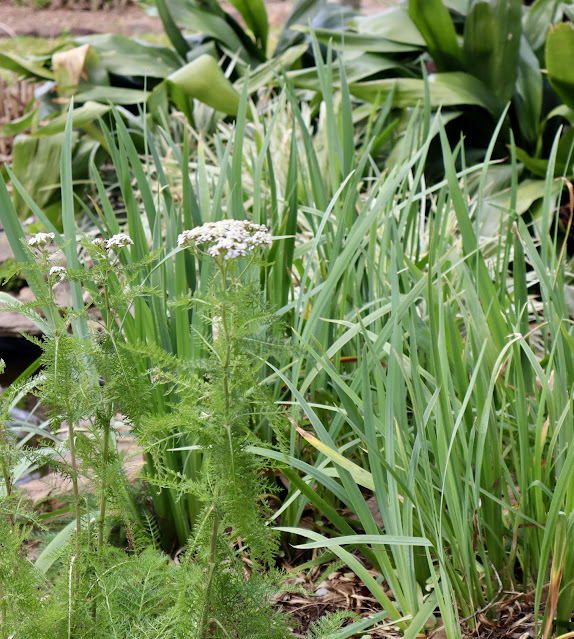
By the little pond, the yarrow is just about at the end of its bloom cycle but a few blossoms still hang on.

And by the fountain, wild Oxalis violacea, aka wood sorrel, thrives and blooms.

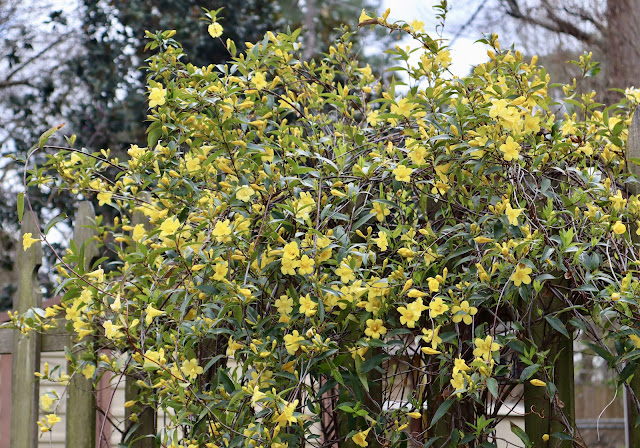
The Carolina jessamine blooms gloriously for several weeks. It's not at its peak bloom yet. That should come in about another week.

And in my entry hallway, there are sunflowers for Ukraine.

I hope things are blooming in your world. Thank you for visiting mine. Happy Bloom Day!

(And thank you, Carol of May Dreams Gardens for hosting us each month.)


Monday, March 14, 2022

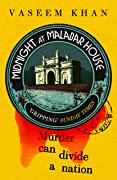
Midnight at Malabar House by Vaseem Khan: A review

In Midnight at Malabar House, we visit India in 1949 after partition. The separation of the sub-continent into two countries, India and Pakistan, precipitated mass movements of people as Muslims tended to move toward the territory of Pakistan, and Hindus and Sikhs sought to settle in India. The upheaval caused conflict and cost countless lives on both sides. Even after the partition was accomplished, India continued to be riven by religious friction and strife. Into these turbulent times in a new country, Persis Wadia stepped as the first (and until then only) female police officer. As such, she had to deal with prejudice and navigate the personal and political resentment of colleagues and superiors.

Parsee Inspector Wadia is based at Malabar House in Bombay which is where the police hierarchy places its misfits and those whose careers have gone awry for some reason. She has only been on the job for a few months and is still learning her way around. She is both idealistic and determined and she has a considerable amount of anger stirring inside her in response to the inequities of society. Her boss, Superintendent of Police Roshan Seth, tries in his own way to support her while at the same time wishing that she would just go away, go home, find a man, and start producing children. In this last wish, he has an ally in Persis' Aunt Nussie. She has a candidate in mind for Persis' potential marriage partner, but Persis is uncooperative. Getting married would mean that she would have to leave the police and she's not about to do that. 

Persis lives with her father in the apartment above the bookstore that the father owns. He is still grieving the death, several months prior, of his beloved wife, Sanaz. The circumstances of her death are a bit of a mystery at first.

Persis is on duty at Malabar House when a call comes in from the aide of an important British diplomat named Sir James Herriot. Sir James was hosting a New Year's Eve party at his residence while dressed as Mephistopheles. But now his dead body has been discovered. He has been murdered and is seated at his desk but his trousers are missing. Persis has a very big case and perhaps a scandal on her hands. She quickly learns that Herriot was not really the upstanding citizen that he was portrayed to be and there seems to be no lack of potential suspects. But how to untangle the lies from uncooperative witnesses and finally get at the truth of what happened? Who really had the strongest motive for wanting Sir James dead? In searching for the answers to those questions, Persis has an ally in British criminologist Archimedes 'Archie' Blackfinch and there are hints that this alliance could become more than just professional. 

This book, while fiction, is firmly based on actual Indian history during its chaotic transformation. Gandhi, the architect of the new country, is dead having been shot in 1948 by a militant Hindu nationalist. The politicians left to carry on struggle to achieve the unity that is needed. To do so they have to clear away the detritus left by British colonial history in India and Pakistan. The effects of that struggle filter all the way down to local police procedures and the work of Parsee Inspector Persis Wadia. This was quite an interesting look at this fraught period but one must admit that the execution of the plot left a bit to be desired. The writing seemed curiously without passion. The story was simply told as one might give a weather report. In other words, it was flat and featureless. Still, I did like the character of Persis and I liked the concept. There's quite a lot to build on there.

My rating: 3 of 5 stars

Saturday, March 12, 2022

Poetry Sunday: Daylight Savings Time by Amy LV

I went looking for a poem about the changing of the time and found this one by someone calling herself Amy LV. I thought it expressed well the confusion that many feel regarding setting the clock forward or backward an hour twice each year. To answer the question she asks in the last stanza, I'm pretty sure Father Time is thoroughly oblivious to our human time-keeping.

Daylight Savings Time

Set clocks forward.
Set clocks back.
Set clocks forward.
Who can keep track?
When is it fall?
When is it spring?
You can't be sure of anything.
An hour ahead.
An hour behind.
Will anybody ever find that missing hour?
Where does it go? 
Is my clock fast?
Is your clock slow?
Dark or light.
Is it today?
Is it yesterday?
Daylight savings time is here.
Do you think the sun will stay?
Are you confused two times each year?
What time is it?
I'm so unclear.
Time can put me
in a tizzy.
Do you think Father Time feels dizzy? 


Friday, March 11, 2022

This week in birds - #492

 A roundup of the week's news of birds and the environment:

Most winters our bird feeders are constantly covered in these hungry little birds. They are Pine Siskins, noisy, active, argumentative, and always fun to watch. This winter I have not seen a single one. Where are they? I have missed them.

*~*~*~*

As Russia has pressed its invasion of Ukraine, the main concern has been the fate of the humans caught in its path. But what about Ukraine's environment? War inevitably brings environmental destruction and this one is no exception.

*~*~*~*

In all the squawking about high gas prices, conservatives have been quick to point the finger at the country's conservation policies, implying that we would be energy self-sufficient if we just "Drill, baby, drill!" But this report says we can't drill our way out of the problem. 

*~*~*~*

The Pacific Flyway of migrating birds is in serious danger of collapse because of the water crisis in the Klamath Basin, one of the continent's most important wetlands.

*~*~*~*

Gray wolves are making a comeback in California, but, predictably, not everyone is thrilled about that.

*~*~*~*

The Smiley-Woodfin Native Prairie Grassland is the largest remaining section of tall-grass prairie in Texas. It is considered a living museum, but its continued existence is threatened by plans to install solar panels there.

*~*~*~*

An ice age painting on a rock in Colombia depicts giant sloths and other animals now extinct in the Americas.

*~*~*~*

Scientists say that the Amazon rainforest is near the "tipping point" from which it would be impossible to recover. This would have dire implications for the planet.

*~*~*~*

Long ago, FDR had called for the establishment of an international park with Mexico that would encompass a great transboundary conservation area spanning the Rio Grande. That dream is still alive and maybe its time has come. 

*~*~*~*

Redlining which allowed for federal discrimination in housing based on race was outlawed more than half a century ago, but it still has a negative impact on people's lives. 

*~*~*~*

The endangered Hill's horseshoe bat that was feared to be extinct has been found still clinging to life in a dense Rwanda forest to the delight of conservationists.

*~*~*~*

Birds possess a magic that is even able to capture the imagination of teenage boys.

*~*~*~*

Salmon are suing the city of Seattle. More accurately, the Sauk-Suiattle Indian Tribe is suing in the name of the salmon as part of the "rights of Nature" movement. They hope to force the removal of three dams that impede the salmon's ability to spawn.

*~*~*~*

The state wildlife resources commission in North Carolina has voted to allow bear hunting in three bear sanctuaries, provoking an outcry from local residents and animal rights groups. The commission's justification of the action is that there have been "increased human-bear interactions."

*~*~*~*

You'll never hear the call of an Ivory-billed Woodpecker in the wild but thanks to recordings, you can listen to the voice of the woodpecker and many other extinct birds.  

*~*~*~*

The EPA plans to allow the use of toxic pesticides that paralyze bees, butterflies, and other insects in spite of moves by the European Union to ban the use of the toxins that have been blamed for a serious decline in insect populations. 

*~*~*~*

The last intact forest in Tallahassee, Florida is threatened with destruction as the private owners of the forest want to cut it down and build a housing development.

*~*~*~*

The White Ibis is the iconic bird of Florida's Everglades, but it is moving to the suburbs in search of food handouts from humans.

*~*~*~*

Scientists say there are five common personality traits in animals and that they are important to study in understanding the roles that the animals play in their particular ecosystems.

*~*~*~*

It's easy to feel helpless and overwhelmed when faced with a problem as big as climate change but here are six steps that one can take in one's life that will help to reduce the carbon emissions driving the change. 

*~*~*~*

The American Bird Conservancy's Bird of the Week is the Red Phalarope, female pictured here. It is a shorebird that nests on coastal tundra and winters at sea.

*~*~*~*

Even with all the terrible problems in the world, it is still possible to find joy in the imminent arrival of spring and the new beginnings that it promises.

Wednesday, March 9, 2022

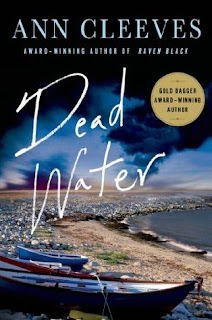
Dead Water by Ann Cleeves: A review

Continuing with my reading of Ann Cleeves' Shetland series, this is the fifth entry. Those who have read the series or have at least read the fourth book will remember that Inspector Jimmy Perez suffered a personal tragedy in that one. The action of this book takes place just a few months later and Perez is still in deep mourning and on leave from his job. It could be read as a standalone, as Cleeves provides enough background information so that such a reader would not be lost.

The Procurator Fiscal (prosecutor) Rhona Laing, a resident of Shetland, discovers a body on the boat that she regularly takes out. The murdered man is Jerry Markham, a former resident of Shetland who had recently returned for a visit and to investigate a story he was considering writing about. Markham was a journalist who was apparently looking into an island group that is promoting green energy through ocean tides. There seems to be some controversy around the issue with some groups supporting and some opposing it and emotions do run hot on the island, especially when money is involved.

Detective Inspector Willow Reeves is assigned to investigate the crime and she initially works with the sergeant, Sandy Wilson, in Inspector Perez's absence. Reeves intuits almost immediately that Rhona Laing is withholding information and she suspects that she may have had something to do with the murder, but Wilson defends Laing and is quite sure that she couldn't be involved. But we know that she's not telling everything she knows.

The murder victim, it turns out, may have had plenty of enemies on the island. Years earlier he had run out on his pregnant girlfriend there. That, needless to say, did not go down well with her family and they have long memories. The girlfriend, after a miscarriage, got on with her life and now seems settled and happy. But resentments against the man who wronged her linger. To complicate things even further, soon another murder occurs and the police have their hands full investigating.

And soon Jimmy Perez is drawn into the investigation to provide local information to the investigator. His understanding of the locals and their interrelationships is key to solving the crimes. At the same time, we get a view of Perez's personal life as he tries to adjust to his new situation and his role of caretaker to a small child, a precocious and sweet little girl, the daughter of his former friend, Duncan Hunter, who is much too busy to take responsibility for his child.

The murder investigations proceed in a logical manner and there are plenty of clues as well as red herrings along the way. And we know that, in the end, it will be Jimmy Perez who comes up with the solution, even if he is not officially involved.

As in all her books, Cleeves describes her characters so well that we feel as if they are standing in front of us. This includes the detectives as well as all the suspects involved. In this one, particularly, we get a real feel for the relationships between the detectives as they work. And her descriptions of the physical aspects of the island and its culture provide a vivid setting for the action. My only real complaint about the book is that it seemed to go on too long. The solution, the ending, was a bit drawn out. Those are fairly minor quibbles. This was another strong entry in an interesting series.

My rating: 4 of 5 stars  


Monday, March 7, 2022

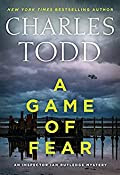
A Game of Fear by Charles Todd: A review


Charles Todd has been the name used by a mother and son writing team of mysteries. In a sad note at the beginning of this book the son informs us of the death of his mother. They've had a good run. This is the 24th in the Ian Rutledge series.

The time is the spring of 1921. As we are reminded at one point in the book, Inspector Ian Rutledge, the World War I veteran, is still quite a young man in his twenties. His superior at Scotland Yard is still the odious Chief Superintendent Markham who despises and is jealous of him and takes every opportunity to give him assignments that have a high potential for failure. In this case, the assignment is to go to the small village of Walmer in Essex and find a killer who is a ghost.

The ghost is one Captain Roger Nelson who was killed in the recent war, but Lady Felicia Benton who is herself a war widow and who knew Captain Nelson claims that as she stood by a window of her manor house she witnessed him kill someone. No body has been found and the local police are understandably skeptical about her story. But Lady Felicia is a relative of the Chief Constable of Scotland Yard and so Rutledge is dispatched to sort it all out.

What he finds in Walmer is a set of mysteries all surrounding what was once a busy airfield housing airmen and support staff for the RAF. Lady Felicia lives in a house that was formerly an abbey located next to the airfield. She had entertained many of the airmen in her home during the war. Rutledge finds her to be a sensible woman of sound mind and not likely to have imagined the crime that she reported. He seeks other explanations for what happened and soon finds them.

He is approached by a woman whose son, a local boy, had disappeared during the war, never to be accounted for. Several people in the community also reported having seen a ghost during the war who foretold the deaths of pilots. A bunch of kids had reported something at the old airfield before it was torn down, something that has scared them into silence. Mysteries seem to abound in this remote village and an entire shoal of red herrings swims around the place muddying the waters.

There are many dead-end leads that confuse things and Rutledge keeps getting redirected to other places. He's back and forth to London and finally is sent to France to follow an obscure lead. And every time he gets sidetracked, it seems that something terrible happens. Moreover, there is a side plot concerning Rutledge's attraction to Kate Gordon which has been hinted at now in a couple of the books, and the reader wonders if this is actually finally going somewhere. We also learn in the last chapter that Rutledge is being promoted to Chief Inspector, a prospect that appalls the odious Markham.

Maybe I was subliminally affected by the knowledge that half of the writing team had died while the book was being prepared, but I felt that its plot was really scattered and all over the place. The action just seemed to jump around without any clear plan in mind. Even though in the end all the clues came together and the solution was explained, the whole thing felt awkward and forced. Certainly not the best effort in this very long series.

My rating: 3 of 5 stars

Saturday, March 5, 2022

Poetry Sunday: March by William Cullen Bryant

The winds of March are upon us. No storms, at least not yet, but working outside is a constant struggle to keep windblown hair out of my eyes. We are finally having pleasant days, other than the wind, and I have been able to get outside and do work in the garden this past week. It's a great release after being cooped up inside for much of the winter. Unlike most years, we have actually had a sustained winter this year. Normally, we have about a week of cold weather and then straight into spring, but not this year. And so, I am better able to appreciate the coming of March and the changing of the seasons that it brings. William Cullen Bryant appreciated it, too.  

March 

by William Cullen Bryant

The stormy March is come at last,
With wind, and cloud, and changing skies;
I hear the rushing of the blast,
That through the snowy valley flies.

Ah, passing few are they who speak,
Wild stormy month! in praise of thee;
Yet, though thy winds are loud and bleak,
Thou art a welcome month to me.

For thou, to northern lands again,
The glad and glorious sun dost bring,
And thou hast joined the gentle train
And wear'st the gentle name of Spring.

And, in thy reign of blast and storm,
Smiles many a long, bright, sunny day,
When the changed winds are soft and warm,
And heaven puts on the blue of May.

Then sing aloud the gushing rills
And the full springs, from frost set free,
That, brightly leaping down the hills,
Are just set out to meet the sea.

The year's departing beauty hides
Of wintry storms the sullen threat;
But, in thy sternest frown abides
A look of kindly promise yet.

Thou bring'st the hope of those calm skies,
And that soft time of sunny showers,
When the wide bloom, on earth that lies,
Seems of a brighter world than ours.

Friday, March 4, 2022

This week in birds - #491

A roundup of the week's news of birds and the environment

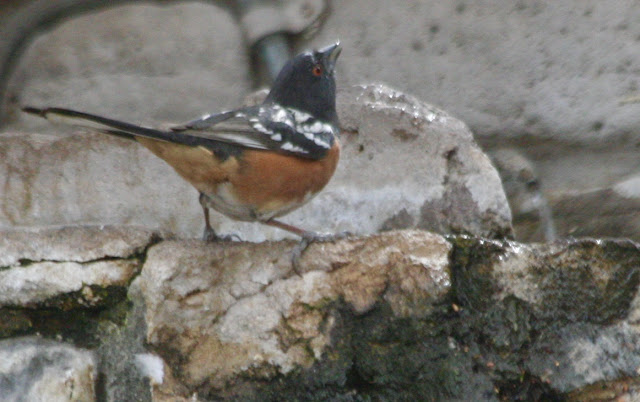
Spotted Towhee having a drink. Photographed at Fort Davis in West Texas.

*~*~*~*

The climate scientists assure us that there is still hope but the projections of the Intergovernmental Panel on Climate Change, reported this week, make clear that we are barreling toward a hot and hellish future on Earth unless we take the necessary steps to prevent it.

*~*~*~*

The country's oldest national park, Yellowstone, has passed its 150th birthday and it is busier and wilder than ever, according to the park's 'winterkeeper.' 

*~*~*~*

And here, in celebration of Yellowstone's birthday, is a photo diary of that magical place. 

*~*~*~*

California, always a leader in environmental protection, wants to eradicate microplastics and they have come up with a 22-step action plan to try to accomplish that.

*~*~*~*

Here's a bit of good news for the environment: The American Bird Conservancy is touting its success in getting the rodenticide d-CON removed from the market. This occurred in 2015. Rodents poisoned by the pesticide were then eaten by predators who were also poisoned. However, the victory is not complete because it can still be bought in bulk from agricultural supply stores so the fight goes on.

*~*~*~*

Life on Earth without its insects would be much more boring. Here are 10 little-known facts about the critters.

*~*~*~*

In addition to the threat to innocent humans as a result of the Russian invasion of Ukraine, there are twenty endangered species that are at risk because of the fighting.

*~*~*~*

The Interior Least Tern has had a dramatic recovery because of its protection under the Endangered Species Act. Its increased population may soon lead to its delisting, a welcome sign of its recovery.

*~*~*~*

If they have the right kind of tree lions can climb them, but many of them don't. The question is why. 

*~*~*~*

The New York Times has a map that shows where biodiversity is most at risk in the country. It is cause for concern.

*~*~*~*

Florida's Key deer population has bounced back from its low a few years ago, primarily because it was given endangered species protection. But the Fish and Wildlife Service has been working on proposals that would strip the deer of those protections, even though the agency's own scientists have highlighted the ongoing threats to the animal's habitat.

*~*~*~*

Here's something that should keep you awake at night: The U.S. Supreme Court is signaling that it may restrict the federal government's ability to address the climate crisis. The court currently has six out of nine justices that are staunchly, some might say rabidly, conservative and who have evinced little concern about the protection of the environment.

*~*~*~*

Elephant seals as spies? In a manner of speaking. Biologists have attached audio recording devices to some of them in order to eavesdrop on other marine life, including sperm whales.

*~*~*~*

A botanist has created a forest with tree species that she has picked specifically because of their ability to withstand a warming climate. It is quite literally a forest planted to endure.

*~*~*~*

Bills currently pending in Congress would give conservation protections to 7,000 miles of rivers and help to safeguard drinking water, biodiversity, and recreation. They represent a historic opportunity for this Congress to act to protect the environment and our children's future.

*~*~*~*

In Hawaii, fences are being built to protect fast-disappearing endangered species such as the Palila and sensitive species like the Laysan Albatross. The fences are meant to help protect the birds from invasive species.

*~*~*~*

A greater reliance on clean energy would be one way to effectively combat Russian incursions.

*~*~*~*

This gaudy fellow is the Gang-gang Cockatoo, common to Canberra's suburbs and the nearby bush reserves. Its numbers have seriously declined because of bushfire disasters and climate change and it is now set to be listed as an endangered species.

*~*~*~*

The southeastern coastal region of Australia has suffered its worst flooding in a decade because of recent torrential rains. Homes have been washed away and power lines cut and thousands of people have had to be evacuated. 

*~*~*~*

California's plan to demolish four massive dams has cleared a major hurdle with federal regulators. It is hoped that the destruction of the dams would help to save the imperiled migratory salmon.

*~*~*~*

The American Bird Conservancy, having just passed its 20th anniversary, is taking the opportunity to celebrate some of the victories for the birds that it has won in those twenty years.