Your faithful scribe is sick and, I am sorry to say, unable to put together the usual weekend posts. So no "This week in birds" or "Poetry Sunday." I blame it all on my son-in-law who recently made a business trip to China. I'm convinced he brought home some exotic bug that jumped right across my immune system barriers and made me ill. Ah, well, this, too, shall pass in a few days and I hope to be back at my usual post next week.
Friday, December 29, 2023
Saturday, December 23, 2023
Poetry Sunday: On December 21 by Amos Russel Wells
I hear rumors that in some parts of the northern hemisphere, they actually have winter, but here in the humid South, not so much. At least not so far. Our daytime high temperatures have not dipped below the 60 degrees Fahrenheit mark yet.
Our actual winter with its coldest temperatures usually comes in January and that will probably be true in this winter as well. Perhaps then we may see days with just a touch of the wintry conditions as described by Amos Russel Wells in his poem. But every such day just brings us closer to spring.
On December 21
by Amos Russel Wells
Now let the weather do its worst,
With frost and sleet and blowing,
Rage like a beldam wild and curst,
And have its fill of snowing.
Now let the ice in savage vise
Grip meadow, brook, and branches,
Down from the north pour winter forth
In roaring avalanches.
I turn my collar to the blast
And greet the storm with laughter:
Your day, old Winter! use it fast,
For Spring is coming after.
The world may wear a frigid air,
But ah! its heart is burning;
Soon, soon will May dance down this way:
The year is at the turning.
There's not a sabre-charge of cold
But brings the blossoms nearer;
By every frost-flower we shall hold
The violets the dearer.
So rage and blow the drifting snow
And have your fill of sorrow:
The turning years bring smiles for tears;
We'll greet the spring to-morrow!
Friday, December 22, 2023
This week in birds - #575
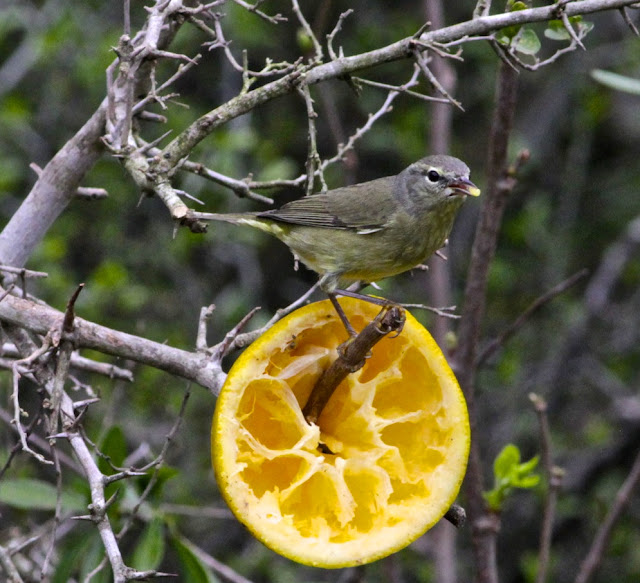
A roundup of the week's news of birds and the environment:
*~*~*~*
Here are some of the key biodiversity issues for the coming year.
*~*~*~*
El Niño continues to build strength. What does that mean for the weather in 2024?
*~*~*~*
At least it gave plenty of warnings; now an Icelandic volcano has erupted.
*~*~*~*
Space rocks slamming into our planet have long affected life on Earth.
*~*~*~*
Five endangered gray wolves have just been released into the wild in the western part of Colorado.
*~*~*~*
Some of the weirdest life on Earth exists in deep caves.
*~*~*~*
I would love to visit this exhibit of leaf-cutter ants at the American Museum of Natural History. Amazing critters!
*~*~*~*

*~*~*~*
Have you ever seen an orange river? Some of the Arctic rivers are turning that color.
*~*~*~*
That apes have remarkably long memories and can remember old friends from years earlier should not be a surprise.
*~*~*~*
What were Earth's early days like? A lagoon ecosystem in Argentina's Puna de Atacama Desert may hold clues.
*~*~*~*
Human activities have driven about 12% of Earth's bird species to extinction, according to a new study.
*~*~*~*
As insects become more scarce, flower species are adjusting and evolving to self-pollination.
*~*~*~*
President Biden has moved to ban most old-growth logging in national forests. That's a great step in the right direction but how can we save our forests?
*~*~*~*
Here's a report about tracing Charles Darwin's route around the tip of South America.
*~*~*~*
Maybe curling into a ball when things get tough is an instinctive reaction. Trilobites perfected it.
*~*~*~*
It turns out there are plenty of "Christmas" lights in the cosmos at this time of year.
*~*~*~*
And here on Earth, some of the smartest creatures have eight arms and one of them has a warning about climate change and rising sea levels.
*~*~*~*
A Ponderosa pine called Bigelow 224 also contains a warning for us. Maybe we should listen to what Nature is shouting at us.
*~*~*~*

*~*~*~*
The Guardian's "The week in wildlife" as always has some marvelous pictures.
*~*~*~*
And finally, reindeer are multitaskers which is probably good news as Santa gets ready to steer his team on their annual journey.
*~*~*~*
Whatever holidays you celebrate here at the end of this calendar year and the beginning of the new one, my wish for you is that they will be peaceful and joyful.
Holly by Stephen King: A review

The book features a character who has appeared in the background in other King novels, Holly Gibney. In this one, she is front and center as the title of the book would indicate.
Holly is a partner in a detective agency called Finders Keepers. Her life is a bit complicated at the moment by the facts that her mother has just died and her partner, Pete, is currently suffering from Covid. So Finders Keepers is a bit strapped for working detectives at the moment, but when the agency receives a call from Penny Dahl, a desperate mother who has been unable to contact her daughter, Bonnie, something in the woman's voice makes it impossible for Holly to turn her down.
Her search for Bonnie brings her in contact with a pair of professors at the local college. Professors Rodney and Emily Harris are octogenarians and are semi-retired. They appear to be the most benign and harmless academics, but appearances can be deceiving. And they were never more deceptive than in this case. Rodney and Emily are (not to put too fine a point on it) cannibals. Their basement harbors a cage where they keep their "livestock" before slaughtering and eating them.
Holly is off her guard in the presence of the professors, not considering them any kind of threat. That is her big mistake and is how she ends up in that cage in the basement. (Spoiler alert!) She is not slaughtered and eaten and lives to inhabit what I understand will be a series of Stephen King books in which she will evidently be the main character.
And she is a great character. She is resourceful and quick-witted and utterly devoted to her profession. I look forward to reading her further adventures, so, quick, Mr. King, get busy on that next book!
Thursday, December 21, 2023

Saturday, December 16, 2023
Friday, December 15, 2023
This week in birds - #574
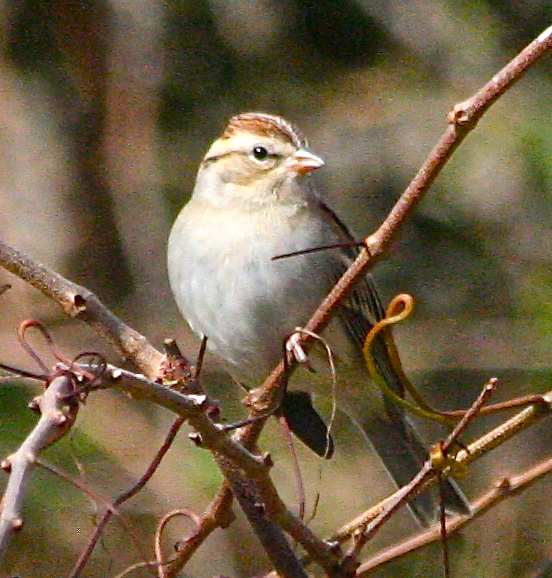
A roundup of the week's news of birds and the environment:
*~*~*~*
Our sun has been putting on a show this week with the biggest solar flare since 2017.
*~*~*~*
A robotic spacecraft launched by NASA has brought back asteroid pieces that offer clues to life's origins.
*~*~*~*
Two men have been charged with killing more than 3,600 birds, including Bald Eagles, to sell on the black market. The mind boggles at the wanton waste.
*~*~*~*
Are you a morning person? Then you might have Neanderthal genes as part of your makeup.
*~*~*~*
The climate summit approved a plan to move away from fossil fuels and to ramp up the use of renewable energy. Still, climate experts were disappointed that the summit fell short of insisting on a phase-out of fossil fuels.
*~*~*~*
The fossil of a juvenile tyrannosaurus rex showed that before its death it had recently feasted on turkey-sized creatures somewhat similar to an emu. It died with a full stomach.
*~*~*~*
The Guardian's "This week in wildlife" features some amazing animal pictures.
*~*~*~*
Who can take water from Nature and who decides who can do it?
*~*~*~*

*~*~*~*
It's true - Christmas tree farms can actually be a boon to wildlife.
*~*~*~*
The reintroduction of endangered Mexican wolves to the southwestern United States has had its ups and downs.
*~*~*~*
The Great Lakes are suffering from a new plague - pet goldfish released into their waters.
*~*~*~*
A 700-year-old forest has been discovered near a busy North American highway.
*~*~*~*
Ruffed Grouse can be very elusive birds but, under the right circumstances, they can become quite friendly with humans.
*~*~*~*
Free-ranging cats can have a quite devastating effect on wildlife.
*~*~*~*
Cats are notoriously independent critters, but they will play fetch. When they want to play fetch.
*~*~*~*
Here are some amazing pictures of the Northern Lights.
Thursday, December 14, 2023
The Running Grave by Robert Galbraith: A review

This is the seventh entry in Robert Galbraith's (a.k.a, J.K. Rowling's) Cormoran Strike series. It has evolved into the Cormoran Strike/Robin Ellacott series as the two are now partners in the detective agency. In this entry, it is primarily Robin's story as she goes undercover to try to find out more about a dangerous cult.
That cult is the Universal Humanitarian Church, a religious cult operating in the Norfolk countryside. The cult has attracted a young man named Will who has become completely enthralled and committed to its activities. Will's father engages the detective agency to find out what is going on and try to extract his son.
On the surface, the UHC appears to be a benevolent organization doing charity work among the poor, but when the detectives dig below the surface, a different picture emerges. That picture is a lot darker and more sinister with a series of unnatural and unexplained deaths.
So Robin infiltrates and becomes a part of the cult to find evidence of what's happening while Strike monitors as best he can from the outside.
And what about Robin and Strike's personal relationship? Well, that continues to evolve as well. Not to put too fine a point on it, they are in love with each other but neither admits it to the other. They barely admit it to themselves. Robin has continued her relationship with Murphy, the police detective, but that isn't going very well. Murphy is extremely jealous and possessive. Strike, meanwhile, is still involved with Charlotte but that relationship comes to a sudden and definitive end in this book so we'll have to see where he goes, romantically speaking, in the future.
Galbraith seems to be building toward something here but it's hard to say just what. How would a romantic relationship affect the partners' working relationship? Would they be able to sustain a romantic/working relationship? Perhaps Galbraith is pondering that question as well as she plans entry number eight in this series. I look forward to seeing how she answers the question. I'm sure it will make for interesting reading!
Tuesday, December 12, 2023
North Woods by Daniel Mason: A review

The book tells the story of a house in the north woods of the title and of the people who inhabited it through many decades. The woods are located in western Massachusetts and the first inhabitants are a Pilgrim couple who had fled the rigid strictures of their society. The novel then proceeds through twelve interlinked stories of that first couple and all the residents that followed.
Those residents include an English soldier who abandons the battlefield to raise apples; a pair of spinster twins; a crime reporter; a lovelorn painter; a conman; and yes, even that panther that appears on the cover. Their stories were a bit uneven in my estimation. I enjoyed some more than others. My favorites were probably the spinster twins and the painter, as well as the apple-raiser.
Daniel Mason's descriptions of Nature were really my favorite parts of the book. I loved how he explored the changes that came to the woods as the climate changed and pine trees began to replace some of the native hardwoods. He also has a talent for making the case for how we are connected to our environment and to one another. Moreover, those connections exist through time, space, and language and are undeniable and unbreakable.
The book reminded me in some ways of Richard Powers' The Overstory and that is high praise from me. I hope Mason will produce more works in this vein. I'd certainly be there to read them!
Saturday, December 9, 2023
Poetry Sunday: December by Harvey Carson Grumbine
I went looking for a poem about December and found them mostly covered in snow. That's winter as it looks up north, of course. Around here, in Southeast Texas, things are considerably greener but evidently no one has written a poem about that! Ah, well, many of my readers live in colder climes and so perhaps will find the sentiments expressed in this poem at least somewhat familiar.
December
by Harvey Carson Grumbine
High like skeletons grim
The trees hold up their arms;
The last leaf's hurried from its limb
By the tempest's wild alarms;
The river ripples gray and cold,
And autumn's o'er like a story told.
Deep in the lonely wood
The leaves lie thickly strown;
The timorous rabbit finds him food,
The snow-bird seeks his own;
The cricket long has ceased his song,
For the breath of winter's cold and strong.
Close to the level plain
The snow clings like a sheet;
The chimney moans as if in pain,
Lashed by the hissing sleet;
And all good men are glad to be
Where the Yule-log sparkles merrily.
December
by Harvey Carson Grumbine
High like skeletons grim
The trees hold up their arms;
The last leaf's hurried from its limb
By the tempest's wild alarms;
The river ripples gray and cold,
And autumn's o'er like a story told.
Deep in the lonely wood
The leaves lie thickly strown;
The timorous rabbit finds him food,
The snow-bird seeks his own;
The cricket long has ceased his song,
For the breath of winter's cold and strong.
Close to the level plain
The snow clings like a sheet;
The chimney moans as if in pain,
Lashed by the hissing sleet;
And all good men are glad to be
Where the Yule-log sparkles merrily.
Friday, December 8, 2023
This week in birds - #573
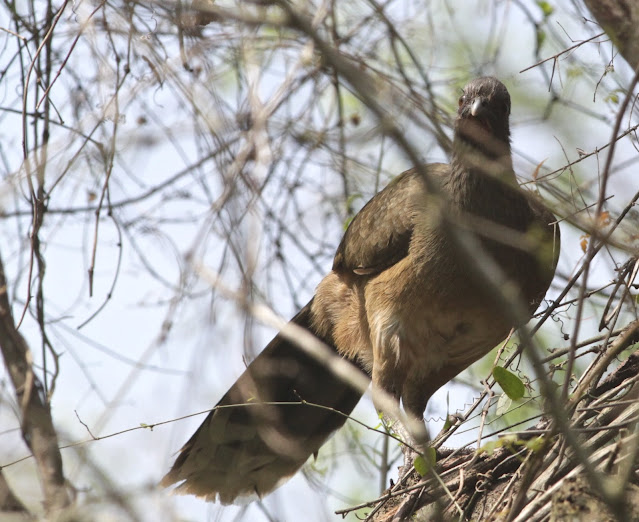
A roundup of the week's news of birds and the environment:
*~*~*~*
Here are those pesky scientists again! This time they are warning that Earth is on the verge of five catastrophic tipping points.
*~*~*~*
Here's some good news for a change: The wildfire season has been exceptionally quiet this year. But don't expect that to hold in the future.
*~*~*~*
Indigenous advocacy has led to the removal of four dams along the Klamath River in northern California.
*~*~*~*
In the Southern Ocean, the world's biggest iceberg has broken free and is drifting with the steering wind and currents.
*~*~*~*
Efforts are underway to try to save Brittany's rare Quimper snail before their habitat is destroyed by the construction of a tramway.
*~*~*~*

*~*~*~*
2024 is expected to be a particularly bad year for coral, with unprecedented bleaching possible.
*~*~*~*
Cuttings and seeds from the famed Sycamore Gap tree on Hadrian's Wall that was felled by vandals are showing signs of growth. Hope is kindled.
*~*~*~*

This wonderful creature is the axolotl, an endangered amphibian of Mexico which is
*~*~*~*
In the Yukon River, the salmon that were once plentiful no longer are and that is reason for concern.
*~*~*~*
A giant rat indigenous to the Solomon Islands has been photographed alive, proving that it does still exist there.
*~*~*~*

*~*~*~*

Saturday, December 2, 2023
Poetry Sunday: Stopping by Woods on a Snowy Evening by Robert Frost
I seem to be in a "frosty" mood when it comes to my poetry reading these days. Here is quite possibly my favorite of Robert Frost's poems. After this, I promise to move on to another author for next Sunday's poem. As the poet says, we all have "promises to keep" and I'll do my best to keep this one!
Stopping by Woods on a Snowy Evening
by Robert Frost
Whose woods these are I think I know.His house is in the village though;
He will not see me stopping here
To watch his woods fill up with snow.
My little horse must think it queer
To stop without a farmhouse near
Between the woods and frozen lake
The darkest evening of the year.
He gives his harness bells a shake
To ask if there is some mistake.
The only other sound’s the sweep
Of easy wind and downy flake.
The woods are lovely, dark and deep,
But I have promises to keep,
And miles to go before I sleep,
And miles to go before I sleep.
Friday, December 1, 2023
This week in birds - #572
A roundup of the week's news of birds and the environment:


*~*~*~*
How much life is there on our home planet? A new study confirms that the answer to that question is "Quite a lot!"
*~*~*~*
That life could be threatened by an outbreak of rabies which the city of Omaha is working to contain.
*~*~*~*
It's been an exceptionally quiet hurricane season here along the Gulf Coast but the Atlantic Coast was a different story.
*~*~*~*
Some people in Wyoming are not at all happy about the Biden Administration's emphasis on conservation, recreation, and renewable energy production on public lands.
*~*~*~*
There was a bit of a scandal at the United Nations climate conference when it was revealed that the president of the conference planned to use the event to promote fossil fuels. (And how did a UAE oil executive get to be the president of the climate conference?)
*~*~*~*
The cherry trees along the Tidal Basin in Washington, D.C. are quite famous and quite beautiful but a hungry beaver is not impressed by all that.
*~*~*~*

*~*~*~*
In this country, Wild Turkeys are on the decline and it isn't really clear why this is happening.
*~*~*~*
As the seas rise because of the changing climate, that could be very bad news for some islands. A representative from the Marshall Islands has asked the countries at the COP28 conference for help.
*~*~*~*
The UN weather agency says that 2023 will be the hottest year on record which is even more bad news for islands like the Marshalls.
*~*~*~*
Here are some charts that help to quantify the climate crisis.
*~*~*~*
The threatened Colorado River has a passionate defender.
*~*~*~*
If you are a gardener, you might want to add the Turtle Tree Seed company to your list of suppliers.
*~*~*~*
Warblers seem to have a preference for wealthier neighborhoods but why that should be is down to the impact of urban policies adopted decades ago, policies that had an inherent racial prejudice.
*~*~*~*
Wolverines will now be protected by being added to the Endangered Species List.
*~*~*~*
Hydrilla is a highly invasive water plant and government scientists are adding their expertise to the fight against it.
*~*~*~*
Insects on Mars? Not until scientists manage to establish viable plant growth on the red planet.
*~*~*~*
California's mountain lions remain at risk and one of their biggest threats is the highways and the vehicles that travel on them through their range.
*~*~*~*

*~*~*~*
When it comes to fighting climate change, the best weapons are those supplied by Nature herself.
*~*~*~*
And that is why New York City is planning to plant thousands of trees to dramatically increase its tree canopy.
*~*~*~*
A new calf born at the Sumatran Rhino Sanctuary in Indonesia has been added to a species that has fewer than 50 living members.
*~*~*~*

*~*~*~*
Here is a gallery of some of the best wildlife photos from last week.
*~*~*~*
Nature has produced many strange creatures and one of the strangest is the upside-down swimming Whipnose Anglerfish.
*~*~*~*

*~*~*~*
Ladybugs are cute little beetles but when they swarm into your house seeking winter shelter they can present quite a problem. (I remember that happening years ago in my parents' house and I can attest to the problem!)
*~*~*~*
Every single day for the last twenty years a wild Canindé Macaw called Julieta has visited her beloved Romeo who lives in an aviary in Rio de Janeiro. (And my question is what kind of heartless humans would keep such devoted lovebirds apart?)
*~*~*~*
A sex imbalance among endangered green sea turtles is apparently being fueled by human-caused pollution.
*~*~*~*
The Australian fire season has started early and that is not a good thing.
*~*~*~*
We thought we knew who the earliest Americans were and how they arrived but we may have been entirely wrong.
*~*~*~*
Some of the early residents in Peru built aqueducts which are a marvel of engineering.
*~*~*~*
A young humpback whale in the Bay of Seattle has been putting on quite the show for residents there.
*~*~*~*
And a different kind of show is provided by a moth that looks very much like a hummingbird.
*~*~*~*
Sea otters are returning to Canada's west coast but not everyone is happy about that.
*~*~*~*
And off the coast of Maine, a unique lobster named Bowie is causing quite a stir.
*~*~*~*
In Australia, there's been an explosion in the population of long-haired rats, an event that humans find concerning.
*~*~*~*
Amphibians are adversely affected by climate change and some species are facing extinction.
*~*~*~*

*~*~*~*
Alexandra Petri has some thoughts about the renaming of birds and some suggestions for the new names.
*~*~*~*
Finally, here are some baby turtles returning to the sea in Costa Rica.
Subscribe to:
Posts (Atom)